Health, Fitness,Dite plan, health tips,athletic club,crunch fitness,fitness studio,lose weight,fitness world,mens health,aerobic,personal trainer,lifetime fitness,nutrition,workout,fitness first,weight loss,how to lose weight,exercise,24 hour fitness,
Labels
Technology
New Post
[recent][newsticker]
Latest Post
Top Health News -- ScienceDaily
Aging
Alzheimer's
Articles
Articles : Asthma
Articles : CAFO
Articles : Children's Health
Articles : Cholesterol
Articles : Emotional Health
Articles : Fibromyalgia
Articles : GMO
Articles : Heart Health
Articles : Hormones
Articles : Internal Videos
Articles : Interviews
Articles : Men's Health
Articles : Politics
Articles : Thyroid Disease
Articles : Vaccines
Autism
best natural health source
Children's Health
Detoxification
Diabetes
Diet | body+soul
Diet and Weight Loss News -- ScienceDaily
Digestive Diseases
Dite
Dite & weight loss
Drug Industry
Drugs
EFT
EMF
Emotional Health
Finances
fitness
Fitness | body+soul
Fitness/Exercise
Fluoride
Food
Fructose/Sugar
Gardening
Harvard Health Blog
Health
Health | body+soul
Health and Wellness
health news
health tips
Heart Health
information
Joint Support
Juicing
Men's Health
news
Nutrition
Nutrition | body+soul
Pollution
Raw Milk
Soy
Supplements
Swine Flu
Technology
Thyroid Disease
Top Health
Top Health News -- ScienceDaily
Under Armour
Vaccines
Weight Management
women's health
Women's Health News -- ScienceDaily
work place health
Workplace Health News -- ScienceDaily
Nationwide Bike Shortage From Coronavirus
The COVID-19 pandemic, while crippling the economy as a whole, has led to business booms for a number of niche products, including bicycles. Looking to avoid public transportation such as buses and subways, urban residents are flocking to bike shops to pick up their own personal mode of transport in the form of a bike.
Bicycling is also an enjoyable outdoor activity — one of a dwindling number of pastimes that’s been largely unaffected by stay-at-home orders and quarantines. There’s only one problem: Bicycles have risen in demand so quickly that they’re now in short supply, and if you haven’t already secured one, you may find a shortage in your area.
Bike Shops’ Shelves Are Bare
Ryan Zagata, president of Brooklyn Bicycle Company, told The New York Times that sales have jumped by more than 600% in 2020 compared to the same period in 2019. “I have never seen anything remotely approaching this,” Zagata said. “If you went into a store three weeks ago you could find a bike under $1,000. Right now shelves are bare.”1
Throughout the U.S., sales of bicycles and related equipment and repair services have also soared, nearly doubling in 2020 compared to the same period in 2019, according to data from market research company the N.P.D. Group. “Sales of commuter and fitness bikes in the same month increased 66 percent, leisure bikes jumped 121 percent, children’s bikes went up 59 percent and electric bikes rose 85 percent,” The Times reported.2
In Brooklyn, New York, lines at some bicycle shops extend down the block, while customers may travel to five shops in a day in search of anything leftover. From 20-somethings looking for a bicycle to expand their ability to travel beyond their block to workers intending to use a bike as a new form of transportation to and from the office, the allure of bicycling is reaching segments of the population it hasn’t in decades.
In fact, the last time Larry Duffus, owner of Larry’s Freewheeling bike shop in Manhattan, sold these many bikes was during a 1980 transit strike.3 According to the Times, however, the high demand is ill timed:4
“Most American importers have kept limited inventory since 2018, when … new tariffs [were imposed] on goods produced in China, where some parts used on nearly all bikes sold in the United States are made.
As a result, in 2019 the number of bikes imported into the United States dropped by around 25 percent compared with 2018, according to Mr. Margevicius. In the first quarter of this year, imports were down by around 30 percent compared to the same period in 2019.”
When coupled with factory shutdowns due to the pandemic, bicycle manufacturers are months behind on deliveries, leaving shops with low or nonexistent inventory, especially for more affordable models.
Even preorders for the next expected bike shipments are booming, but some cyclists may find themselves waiting until July, August or later before they can hit the road on their new two-wheeler. As such, Bicycle Habitat, a shop with locations in Chelsea and Brooklyn, New York, warned on May 14, 2020:5
“There is a national bike shortage, unlike anything I have seen before. This is due to increased demand and extensive disruptions to the supply chain. My advice: when you see something that you like — BUY IT. I expect to have a very limited inventory of our most popular bicycles very soon.”
Is a Long-Term Shift in Bicycling Coming?
In the U.S., bicycling to work is uncommon, even in the most bike-friendly regions, such as Portland, where 6.3% of commuters ride bikes. In comparison, fewer than 1% of New York residents use a bike to get to work,6 while nearly half of commuters to work and school use bicycles in the European city of Copenhagen.
The U.S. is largely car-centric, and even when major cities spent millions to enhance bike lanes and other bike-friendly measures, such as bike sharing programs, the percentage of Americans who use a bike to get to work fell by 3.2% from 2016 to 2017.7 There are signs, however, that this could be changing.
A study released in January 2020 by consulting firm Deloitte predicted that tens of billions of additional bicycle trips would take place per year in 2022 compared to 2019, and noted, “This increase in bicycling will double the number of regular bicycle users in many major cities around the world where cycling to work is till uncommon.”8
The report also predicted that a 1% rise in the proportion of people who bike to work would occur from 2019 to 2022 — and that was before COVID-19 was thrown into the mix. Now that global lockdowns have forced cars off the streets, cities are seeing glimpses of what a less car-dependent future could look like, and some may be reluctant to return to the status quo.
Emissions of carbon dioxide have dropped, as have levels of air pollutants like nitrogen dioxide and fine particulate matter. Meanwhile, some cities have turned empty streets into bicycling zones, some of which will remain post-lockdown, including 21.7 miles of streets in Milan, which are being transformed into bike zones.9 Around the globe, people are embracing biking with renewed enthusiasm. According to the BBC:10
“As a form of isolated transport that doubles as exercise — that is much easier given the wealth of empty streets — cycling has become more appealing in a number of cities.
In March, use of bike-share systems increased by roughly 150% in Beijing and 67% in New York, where cycling on main thoroughfares increased by 52%. Meanwhile, cycling traffic increased by 151% on trails in Philadelphia and in April Dundee saw cycling traffic increase by 94%.”
Former transportation commissioner for New York City and principal with Bloomberg Associates, Janette Sadik-Khan, spoke with the BBC about the positive transport recovery programs being initiated not only in Milan but around the globe:11
“The pandemic challenges us, but it also offers a once-in-a-lifetime chance to change course and repair the damage from a century of car-focused streets. Cities that seize this moment to reallocate space on their streets to make it easier for people to walk, bike and take public transport will prosper after this pandemic and not simply recover from it.”
Lessons From the 1970s Bike Boom
This isn’t the first time the U.S. has seen the emergence of a bike boom. In the 1970s, lines at bike shops resembled those being seen today, and shortages were common. At the time, a virus wasn’t the driving force. Rather, the bike boom was tied to environmentalism and physical activity. In an adapted excerpt from Carlton Reid’s “Bike Boom” it’s noted:12
“In the 1970s, U.S. bicycle advocates assumed America would soon become more bicycle-friendly than the Netherlands. But while the Netherlands used the oil embargo to rein back the dominance of the motorcar in its cities and expand its cycleway network, there was no lasting bicycle-shaped legacy for the U.S. The boom went bust, and now few remember how bicycle-crazy America went for a few short years.”
In 1973, at the height of the boom, 15.3 million bikes were sold in the U.S., with most of the increase due to sales of adult bikes. Before then, bicycles had been largely regarded as something for children, but suddenly became a coveted form of transportation and a political statement, promoting an anti-automobile solution to pollution and a way to increase your physical health at the same time.
At one point, the U.S. Department of Interior had plans to construct nearly 100,000 miles of bicycle paths in the next 10 years, a lofty project that would have surpassed even the Dutch cycleway network and radically changed the way U.S. cities look today. Even the U.S. Environmental Protection Agency supported the notion that America should build a network of cycleways, but the plan was never carried out.
“The bikeway-friendly John Volpe left the Department of Transportation to become the U.S. ambassador to Italy. State highway planners reined back what had been grandiose bikeway plans. Bike shop lines thinned out to nothing. Bicycle manufacturers canceled overseas orders.
The bike boom — and the nation’s interest in bicycles — was over. ‘The boom has turned into a bust,’ the chairman of the Bicycle Manufacturing Association of America admitted to the Senate Finance Committee in 1976,” “Bike Boom” reads.13
Ultimately, it was a combination of factors that led the bike boom to fizzle out, from poor quality bikes that made riding uncomfortable to environmentalists focusing their efforts on other issues, such as anti-nuclear campaigns.
“Perhaps the biggest reason for the bust,” “Bike Boom” explained, “was the hoola-hoop problem: 1970s cycling had been a craze, and those attracted to it were not sufficiently sold on the idea to carry on riding long-term, either recreationally or — critically — for Dutch-style daily transport.”14 It’s a warning that should be heeded today, especially as cities reopen with an unprecedented chance for radical change that could bring the bicycle back for good.
“The 2020 bike boom could have a more lasting impact on cities around the world than the 1970s bike boom had on America,” Reid wrote, “But only if planners and politicians — and people — clamor for this change.”15
Embracing Bicycling Is Great for Health
Whether you’re considering bicycling for transportation or recreation, there’s good reason to take up this now-popular pastime, especially if you have a dedicated place to ride, such as biking trails or lanes. Older adults, for instance, may reduce their risk of falls by bike riding daily, as bicycling may preserve balance control and coordination.16
The physical activity bicycling provides can also help you maintain a healthy weight, and cities with more policies to promote bicycling, including those that are supportive of bicycling infrastructures that promote bicycling to work, have fewer overweight or obese residents.17 Even electrically assisted bicycles (e-bikes) contribute to physical activity, providing a workout that’s less intense than conventional cycling but more intense than walking.18
You’ll want to wear a helmet and use caution to avoid accidents and injuries, but generally speaking bicycling is an activity that can be enjoyed by people young and old alike, and can be a great way to get outdoors if you’ve been cooped up inside.
If you’ve got the itch to ride but can’t find any new bikes in stock in your area, check out used bikes via social media or other outlets, as you may be able to find a secondhand option that’s available immediately.

from Articles https://ift.tt/3gXgHZK
via IFTTT
Peak Internet — The Censorship Bubble Is About to Burst
Over the past year, I've written extensively about the initially creeping — and then sweeping — censorship occurring online. Initially, the censorship vortex was on vaccines. Social media platforms and Google all started suppressing and then outright banning content raising questions about vaccine safety.
I warned everyone that this would eventually spread to other topics that might threaten a corporate bottom line. The only surprise was how quickly that happened. Within months, Google started shadow banning and hiding holistic health sites, including this one, in its search results.
In August 2019, I made the decision to leave Facebook due to its clear censoring of valid and truthful information. One year from the time social media platforms began censoring vaccine information, they all started banning views on COVID-19 treatments that differ from that of the World Health Organization.
The Dangerous Suppression of Freedom of Speech
YouTube's CEO even went on the record stating they will block any video that goes against WHO guidance on the COVID-19 pandemic. Shockingly, this includes videos and articles by medical doctors, emergency care specialists and researchers who share their clinical experiences, recommendations and scientific findings.
Just one of countless examples was a May 17, 2020, Full Measure News report1 in which Sharyl Attkisson interviewed doctors reporting good results with hydroxychloroquine. The segment also looked at the potential financial motives driving the mass media's disdain for the drug, while promoting remdesivir and as-of-yet-unavailable vaccines.
Just the News, which reported the takedown of Full Measure's video, writes:2
"Dr. Jane Orient, the executive director of the Association of American Physicians and Surgeons as well as a clinical lecturer at the University of Arizona College of Medicine, urged viewers to 'look at the money' when it comes to the two drugs.
'There's no big profits made in hydroxychloroquine,' said Orient. 'It's very cheap, easy to manufacture, been around for 70 years. It's generic.
Remdesivir is a new drug that could be very expensive and very lucrative if it's ever approved. So I think we really do have to consider there's some financial interest involved here' …
'These are organized efforts,' [Attkisson] said, arguing that politically biased parties are behind efforts to remove or censor contrarian information on social media …
She noted recent efforts by Democratic Rep. Adam Schiff, the chairman of the House Intelligence Committee, to pressure social media companies to censor and downgrade 'harmful' coronavirus-related material and push users instead toward information from the World Health Organization. 'I don't know why we're allowing this,' Attkisson said. 'Nobody appointed Adam Schiff to police our content on social media.'"
Joe Rogan Ditches YouTube
May 20, 2020, Infowars host Alex Jones revealed Joe Rogan has signed an exclusivity contract with Spotify for his Joe Rogan Experience Podcast. You can find the video here. Rogan had reportedly asked Jones to make the announcement.
According to Rogan, the move is his way to strike back against YouTube censorship. Granted, the $100 million paycheck from Spotify probably didn't make it a particularly difficult decision. It also turned out to be a stroke of genius for Spotify, the stock of which jumped 8.4%, or more than $5 billion dollars, after Rogan announced the move on Twitter.3
Jones was one of the first controversial figures to be banned from YouTube, which appears to be the reason he gave Jones the scoop. The straw that broke the camel's back, Rogan says, was YouTube's decision to block differing opinions on COVID-19, as he wanted to interview a variety of doctors and experts about it.
But even before the pandemic, Rogan had bristled against YouTube's decision to demonetize or remove certain interviews. Rogan told Jones he sees YouTube's behavior as "un-American" and "anti-human." Jones wonders if Rogan's move is symbolic of "peak internet." Possibly, it's a sign that the censorship bubble is about to burst.
Rogan Rules New Media Landscape
With 8.52 million subscribers as of May 27, 2020,4 Rogan is currently one of YouTube's biggest channels. His departure is predicted by many to be a serious blow to YouTube's bottom line. As noted by Bari Weiss in a New York Times op-ed,5 Rogan's move matters because the media landscape is changing, and Rogan — and others like him — are "the news" now.
"The timing of Rogan's rise and the Old Guard's disintegration is not coincidental," Weiss writes. "His success was made possible, at least in part, by legacy media's blind spots.
While GQ puts Pharrell gowned in a yellow sleeping bag on the cover of its 'new masculinity' issue (introduced by the editor explaining that the men's magazine 'isn't really trying to be exclusively for or about men at all'), Joe Rogan swings kettlebells and bow-hunts elk.
Men are hungry. He's serving steak, rare. Condé Nast, GQ's publisher, has laid off some 100 employees since the pandemic began. Meantime, 'The Joe Rogan Experience' has 190 million downloads a month.
His success signals a profound shift, or several of them — a shift in what people want to talk about, how they want to hear it, and who they want to hear it from."
Geopolitical blogger Tom Luongo comments on Rogan's appeal, saying:6
"Rogan is an anomaly in podcasting, hell for that matter, all of media and gods bless him for it. Who else can get tens of millions of people to tune into him talking with someone for three hours? CNN can't get people to watch them for five minutes in airports …
Rogan's willingness to talk with and listen to anyone is his greatest asset. It is the key to his rise and his future success on Spotify, who desperately needs a big name to keep their business afloat.
Because in an age of endless spectacle and TV screens and websites crammed to the gills with graphics to distract you from the content, the simplicity of a conversation between two people who aren't shouting at each other has become a welcome node of sanity …
Joe Rogan has now told the entire country that he's had enough. And we needed someone like Joe to do this. That said, Rogan is only one half of the story, however. Because at the same time, one of these platforms needed to break away from the herd and welcome the dissenters.
For Spotify, Joe Rogan is the 'killer app' they needed to differentiate themselves as non-partisan and begin the exodus away from the big platforms who have become nothing but partisan."
Spotify Censors Two of My Coronavirus Interviews
Whether Spotify will in fact live up to the expectation of non-bias remains to be seen. I for one have my doubts, as two of my coronavirus interviews have summarily been deleted off Spotify without recourse.
Spotify claims it only prohibits illegal content, hate content and infringing content. My interviews about coronavirus with Brian Hoyer and Judy Mikovits, Ph.D., clearly do not fall under any of these categories, yet Spotify removed them. So, so much for being a platform for uncensored expression. What's worse, there is no way to dispute Spotify's removal of these shows.
Censorship Threatens Health, Democracy and Freedom
Like Rogan, I have taken my stand. I put up a firewall to prevent Google from indexing my pages, and I will never conform to "consensus reality" just to get my Google ranking back. It's unfortunate, but the way it stands right now, we have to go old-school and share information we find valuable through word-of-mouth, by text, email and private message.
As for content on this site, we have built in simple sharing tools at the top of each article so you can easily email or text interesting articles to your friends and family.
My information is here because all of you support and share it, and we can do this without Big Tech's support. In times like these, sharing information that is not readily available to all is nothing short of a revolutionary act.
Wherever and whenever possible, we must all fight against the oppression of censorship. Democracy hangs in the balance. Everyone must realize that without freedom of speech and opposing viewpoints, there can be no democracy. Instead, what you have is a totalitarian regime.
As it stands, that regime is not even made up of elected officials but unelected individuals representing for-profit multinational corporations. It's time to break free. To do that, consider these suggestions:
|
Become a subscriber to my newsletter and encourage your friends and family to do the same. This is the easiest and safest way to make sure you'll stay up to date on important health and environmental issues. |
|
If you have any friends or relatives who are seriously interested in their health, please share important articles with them and encourage them to subscribe to our newsletter. |
|
Consider dumping any Android phone the next time you get a phone. Android is a Google operating system and will seek to gather as much data as they can about you for their benefit. |
|
Use the internal Mercola.com search engine when searching for articles on my site. |
|
Boycott Google by avoiding any and all Google products: • Stop using Google search engines. Alternatives include Qwant and Swisscows • Uninstall Google Chrome and use Brave or Opera browser instead, available for all computers and mobile devices.7 From a security perspective, Opera is far superior to Chrome and offers a free VPN service (virtual private network) to further preserve your privacy • If you have a Gmail account, try a non-Google email service such as ProtonMail,8 an encrypted email service based in Switzerland • Stop using Google docs. Digital Trends has published an article suggesting a number of alternatives9 • If you're a high school student, do not convert the Google accounts you created as a student into personal accounts |
|
Sign the "Don't be evil" petition created by Citizens Against Monopoly |

from Articles https://ift.tt/2Y1nw3Q
via IFTTT
Teresa Palmer gets real about ‘me time’ when you’re a working mum
Aussie actress and mother-of-three Teresa Palmer gets honest about beauty, self-care and her fitness routine, while sharing her midweek vegan recipes for the whole family.
from Health | body+soul https://ift.tt/3dGmJvS
from Health | body+soul https://ift.tt/3dGmJvS
Association between outdoor light at night and breast cancer risk among postmenopausal women
Outdoor light at night was linked to a higher risk of breast cancer in a recent study.
from Top Health News -- ScienceDaily https://ift.tt/371SCwf
from Top Health News -- ScienceDaily https://ift.tt/371SCwf
Quarantea — Health Benefits of Drinking Tea in Crisis
There are many well-documented medical benefits to tea consumption but during coronavirus shutdowns, the psychological benefits of a scheduled "tea time" with family are also significant. In the U.K., "afternoon tea," traditionally served in the family room or garden, and "high tea," traditionally served after work at the dining table, are part of the nation’s psyche.1
But now, during the shutdowns caused by COVID-19, tea rituals have become even more important in the U.K. because of their comforting familiarity. CNN observes tea may be gaining an edge elsewhere too.2 According to the Food and Agriculture Organization of the United Nations, milk, fruit juices and soda are becoming less popular drinks, giving tea a boost.3
Tea drinking is also rising in the U.S. and sometimes dubbed "quarantea."4 While you might think the places where tea consumption is most popular are China or the U.K., the top tea-drinking country is actually Turkey, where people drink an astounding 6.96 pounds of the beverage annually.5
In addition to the heavy tea-drinking countries of the Middle East and the U.K., the seventh biggest tea drinking country is New Zealand.6 What are some of the reasons this drink is so popular, especially during the COVID-19 pandemic in which some refer to it as quarantea?7
Tea Can Relieve Depression
A likely and understandable outcome among those whose lives have been cut off from their friends, schools, jobs, interests and plans by COVID-19 shutdowns is depression. A Gallup Poll in 2014 found that about 12.4% of Americans who were unemployed had depression or were being treated for it.8 When the unemployment became long-term, 27 weeks or more, the number grew to 18%.9
In May 2020 after weeks of the highest unemployment rates in history due to coronavirus, a whopping one-third of Americans were showing signs of clinical anxiety or depression, The New York Times reported.10 Nearly half said the shutdown was harming their mental health — and a 1,000% increase in calls to a national hotline center over the year before is testament to the angst and despair so many are feeling.11
Luckily, tea has been found in scientific studies to reduce or relieve depression without resorting to dangerous and harsh antidepressant drugs. According to The New York Times:12
"Tea has been associated with a lower risk of depression. A 2015 meta-analysis of 11 studies with almost 23,000 participants found that for every three cups of tea consumed per day, the relative risk of depression decreased 37 percent."13
Research in the journal BMC Geriatric conducted in 2019 found:14
"… consistent and frequent tea-drinking was associated with significantly less depressive symptoms, and such impact was partially mediated by socioeconomic status, health behavior, physical health, cognitive function, and social engagement."
The research found that the tea-drinking benefits were mainly seen in elderly Chinese people and it concluded:15
"Consistent and frequent tea-drinking may effectively reduce the risk of depressive symptoms for the Chinese elderly. The promotion of the traditional lifestyle of tea drinking could be a cost-effective way towards healthy aging for China."
Depression-Relieving Mechanisms Identified
Are the depression-relieving mechanisms that are believed to come from tea-drinking due to its caffeine content? If so, tea would represent the same benefits seen with coffee and other caffeine-rich drinks. According to research in the journal Nutrients, substances other than caffeine may explain tea's mood and emotional actions:16
"Oral administration of green tea polyphenol for 7 days significantly reduced immobility in a mouse model of depression, suggesting that this polyphenol has antidepressant-like effects.
Green tea polyphenols also reduced corticosterone and adrenocorticotropic hormone levels [in mice] thus reducing maladaptive responses to stress by inhibiting the hypothalamic–pituitary–adrenal axis. Stress is well known to be one of the most important factors responsible for depressive disorders."
A study in the journal Pharmacological Research found a similar mechanism in mice:17
"Green tea polyphenols significantly reduced immobility in both the FST [forced swimming test] and TST [tail suspension test] but did not alter locomotor activity in the open field test, suggesting that GTP [green tea polyphenols] has antidepressant-like effects, and this action did not induce nonspecific motor changes in mice.
Green tea polyphenols also reduced serum corticosterone and ACTH levels in mice exposed to the FST. The present study demonstrated that GTP exerts antidepressant-like effects in a mouse behavioral models of depression, and the mechanism may involve inhibition of the hypothalamic-pituitary-adrenal axis."
Tea Lessens Anxiety and Improves Cognition
The COVID-19 pandemic has caused multitudes to lose their jobs, their incomes, their career and educational aspirations and, for some, even their homes. It is no surprise that many are now suffering negative psychological effects like post-traumatic stress symptoms, anxiety, confusion and anger.
According to research in The Lancet in March 2020, 34% of 2,760 horse owners quarantined due to an equine influenza outbreak in 2007 to 2008 in Australia exhibited high psychological distress, compared with around 12% of non-quarantined people.18
Green tea may reduce such negative psychological states like anxiety and improve cognition. According to a meta-analysis in the journal Phytomedicine:19
"The reviewed studies presented evidence that green tea influences psychopathological symptoms (e.g. reduction of anxiety), cognition (e.g. benefits in memory and attention) and brain function (e.g. activation of working memory seen in functional MRI)."
The positive cognitive effects of tea are especially important for the elderly, who may be facing both quarantine-like situations and cognitive challenges. While the beneficial effects could come from the relaxing context in which the tea is consumed — preparing the brew, using a favorite cup and sitting down to enjoy a break from the world's troubles20 — they also likely have a physical base. According to the journal Phytomedicine:21
"The effects of green tea cannot be attributed to a single constituent of the beverage. This is exemplified in the finding that beneficial green tea effects on cognition are observed under the combined influence of both caffeine and l-theanine, whereas separate administration of either substance was found to have a lesser impact."
There Are Many Health Benefits From Drinking Tea
Even during stable times when you do not need a "quarantea," tea offers a multitude of benefits. You do not need to be confused about the different types of tea either.
Black, white, green, oolong and pu'erh teas all come from the Camelia sinensis plant and only differ in how the leaves are dried and prepared. For example, for black tea, the leaves are allowed to oxidize in which the enzymes react with oxygen. Green tea leaves, however, are not oxidized but steamed and pan-fried right after drying.
While green tea extract allows you to consume higher amounts of EGCG (the plant compound epigallocatechin gallate) than you would get from drinking tea, other benefits from green tea are impressive. It may:
- Improve heart, liver and brain health, bone mineral density and weight control and support healthy blood pressure22
- Reduce oxidative stress23
- Support exercise performance, exercise recovery and enhancement of antioxidant protection24
According to the Journal of Indian Society of Periodontology, green tea may also have positive effects on:25
|
Weight loss — EGCG prevents the breakdown of norepinephrine thus causing a rise in metabolism. |
|
Antiaging — Antioxidants in green tea protect the skin from the harmful effects of free radicals, which cause wrinkling and skin aging. |
|
Immunity — Polyphenols and flavonoids found in green tea help boost your immune system. |
|
Cardiovascular disease — Green tea helps prevent heart disease and stroke. |
|
Liver disease — Men who drink more than 10 cups of green tea per day are less likely to develop disorders of the liver. |
|
Cancer — EGCG has been shown to inhibit angiogenesis of tumor cells by stopping the production of angiogenic compounds. |
|
Arthritis — Green tea can help prevent and reduce the risk of rheumatoid arthritis. |
|
Diabetes — Green tea improves lipid and glucose metabolism, prevents sudden increase in blood sugar levels and balances your metabolic rate. |
|
Alzheimer's — EGCG decreases production of beta-amyloid, a protein that forms the plaques that clog the brains of Alzheimer's victims. |
|
Parkinson's — Antioxidants in green tea help prevent against cell damage in the brain, which could cause Parkinson's, and thus help prevent it. |
|
Cold and flu — EGCG, a powerful catechin antioxidant found in green and white teas, can directly kill bacteria and viruses. |
|
Asthma — Theophylline in green tea relaxes the muscles that support the bronchial tubes, reducing the severity of asthma. |
|
Stress — L-theanine, which is a kind of amino acid in green tea, can help to relieve stress and anxiety. |
|
Food poisoning — Catechin found in green tea can kill bacteria that causes food poisoning and kills the toxins produced by those bacteria. |
|
Human immunodeficiency virus — With human immunodeficiency virus (HIV), the EGCG acts as a block to the HIV transport protein on the host cell. |
|
Dental caries — The effects of green tea extract on caries inhibition in hamsters and on acid resistance of human tooth enamel have been suggested by both in vivo and in vitro studies. |
|
Periodontal health — The inhibitory effects of catechin contained in green tea on periodontal pathogens may provide the basis for beneficial effect of daily intake of green tea on periodontal health. |
|
Halitosis — Halitosis is caused mainly by volatile sulfur compounds such as H2S and CH3SH produced in the oral cavity. Tea polyphenols have been shown to have antimicrobial and deodorant effects. |
Tea Reduces Inflammation and May Fight Cancer
Scientific studies have found that ingredients in tea can reduce inflammation and plaque formation. According to the Harvard Heart Letter:26
"'Tea is a good source of compounds known as catechins and epicatechins, which are thought to be responsible for tea's beneficial health effects,' says Dr. Howard Sesso, associate professor of medicine at Harvard Medical School and associate epidemiologist at Brigham and Women's Hospital.
These compounds belong to a group of plant chemicals called flavonoids. Research suggests that flavonoids help quell inflammation, and that in turn may reduce plaque buildup inside arteries. Green tea has slightly higher amounts of these chemicals than black tea."
Green tea may also help to fight prostate cancer, the second most frequently diagnosed cancer in men. In one study of prostate cancer (PCa), the journal Medicine, Baltimore, wrote:27
"[T]here was a trend of reduced incidence of PCa with each 1 cup/day increase of green tea … Our novel data demonstrated that higher green tea consumption was linearly reduced PCa risk with more than 7 cups/day and green tea catechins were effective for preventing PCa."
Green tea also may be a tool against liver cancer. A 2017 meta-analysis in the journal Nutrition and Cancer found a significant inverse dose-response association between green tea drinking and liver cancer risk.28 That inverse association increased with years of green tea drinking and when four cups a day of green tea were consumed. According to the journal:29
"We also found a trend that the incidence of liver cancer was reduced with the increasing years of green tea intake (significance at >20 yr). A significant dose-response association was found between green tea drinking and liver cancer risk.
The downward trend was most obvious when the consumption of green tea increased up to about 4 cups/day. The results showed that the increasing green tea intake may have a preventive effect against liver cancer."
There is no precedent for this worldwide pandemic and people don't know when it will end and may fear getting sick. No one knows what the world will be like when the crisis is over and governments and public health organizations offer slim views into the future. Quarantea, with its appealing, soothing taste and many health benefits, is surely useful during the COVID-19 pandemic.

from Articles https://ift.tt/3eMtXyj
via IFTTT
Magnesium L-Threonate for Depression and Anxiety
The recent coronavirus pandemic has infected over 5 million people and has caused over 300,000 deaths. This pandemic has also caused school and business closings, social distancing, and has forced millions of people to be confined to their homes.
Social confinement can lead to feelings of anxiety, stress and depressed mood, and this can lead to other negative health consequences. Although people can exercise and seek counseling, nutrients can make a difference with the most important one being magnesium.
Approximately 50% of American adults are not getting the estimated average requirement for magnesium (around 400 mg of magnesium/day).1 Indeed, most Americans are only consuming around 250 mg of magnesium per day.2
Thus, a substantial percent of the population is likely magnesium deficient and may benefit by taking an additional 150 to 200 mg of magnesium through supplementation.
In fact, up to 30% of the population is magnesium deficient based on low serum magnesium levels, and up to 84% of certain patient populations are magnesium deficient when using the gold standard IV magnesium load test.3
Thus, subclinical magnesium deficiency is common and leads to numerous mental health issues. This brief review will cover the potential benefits of magnesium, particularly magnesium L-threonate, for mood and anxiety.
Magnesium L-Threonate to the Rescue
Symptoms of magnesium deficiency can include many mental issues such as depression, confusion and agitation.4 Individuals with depression are known to have
- Lower magnesium levels in the blood5 and the brain.6
- Low cerebral spinal fluid magnesium.7
Unfortunately, cerebral spinal fluid magnesium levels are tightly controlled, whereby boosting blood levels of magnesium by 300% only increases cerebrospinal fluid levels by approximately 10 to 19%.8 However:
- Magnesium L-threonate has improved effectiveness for increasing cerebrospinal fluid magnesium levels.9
- Only magnesium L-threonate, as opposed to magnesium chloride or magnesium gluconate, increases cerebrospinal fluid magnesium levels and improves cognition in animal models.10
The first report of magnesium for improving mood was published in 1921, showing success in 220 out of 250 cases.11 Since then, numerous case reports have found rapid improvements in mood with the use of magnesium supplementation without side effects.12 Additionally:
- A randomized equivalent trial found that oral magnesium supplementation was just as effective as an antidepressant for improving mood.13
Thus, clinical studies in humans suggests that magnesium supplementation is beneficial for improving mood. Approximately 60% of individuals who have a depressed mood are considered treatment-resistant and this may be due to magnesium deficiency.14 Moreover:
- Low magnesium levels correlate with poor outcomes in in individuals with a depressed mood who do not respond to medications.15
- Higher magnesium intakes are associated with better mood scores.16
- All of this suggests a potential role for magnesium, especially magnesium L-threonate, for mental health.
In summary, depressed mood may simply be a sign of magnesium deficiency in the brain. Boosting brain magnesium levels, particularly with the use of magnesium L-threonate, may have profound benefits on mood.
Importantly, magnesium is needed to make the three primary neurotransmitters in the brain, i.e., serotonin, dopamine and noradrenaline and melatonin which is important for sleep.

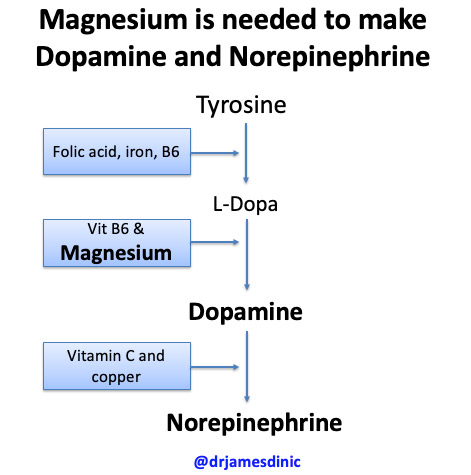
Magnesium L-Threonate for Anxiety Support
|
High levels of stress can lead to magnesium deficiency by increasing the amount of magnesium that is lost in the urine.17,18 |
|
Moreover, magnesium deficiency enhances the stress response.19 |
|
Magnesium deficiency increases stress-induced mortality in animals,20 whereas compensation for magnesium deficiency improves the ability of the nervous system to resist stress.21 |
|
In other words, stress leads to magnesium deficiency and magnesium deficiency leads to stress. |
|
Animals receiving diets low in magnesium display increased anxiety-related behavior,22 and this may be due to hyper-excitability in the brain and increased cortisol production.23 |
|
Importantly, two studies have shown that supplementing animals with magnesium L-threonate reduces anxiety.24,25 |
Thus, magnesium L-threonate may have a central role in anxiety support. In summary, anxiety can cause magnesium deficiency and vice versa. Considering that most people in the United States are not consuming an adequate amount of magnesium from the diet, supplementation with magnesium L-threonate may have an important role for anxiety support.

from Articles https://ift.tt/3cvWBST
via IFTTT
MKRdezign
Powered by Blogger.