Health, Fitness,Dite plan, health tips,athletic club,crunch fitness,fitness studio,lose weight,fitness world,mens health,aerobic,personal trainer,lifetime fitness,nutrition,workout,fitness first,weight loss,how to lose weight,exercise,24 hour fitness,

Latest Post

This article was previously published October 21, 2018, and has been updated with new information.

Molecular hydrogen is a gas with unique and selective antioxidant effects.1 Tyler W. LeBaron is a world-class expert on molecular hydrogen, who has done research at Nagoya University in Japan, where most of his research started. He's executive director of the Molecular Hydrogen Institute (MHI), which is a science-based nonprofit under Section 501(c)(3). MHI is focused on advancing the research, education and awareness of hydrogen as a therapeutic medical gas.

He's also director of several other nonprofit organizations, including the International Hydrogen Standards Association, which is currently creating standards for the ISO criteria for measurement of hydrogen gas. The reason you probably haven't heard of molecular hydrogen is because it's relatively new. The landmark paper published on it in Nature Medicine came out only 10 years ago (2007), and most of the research has been done in Asia.

Molecular Hydrogen 101

Molecular hydrogen refers to diatomic hydrogen or H2 gas — two hydrogen atoms combined together. Hydrogen is the smallest molecule in the universe, and is neutral and nonpolar, which is why its bioavailability is so great. It does not dissociate into its electrons and protons when dissolved in water, so it will not alter the pH of water or your body and has nothing to do with the alkaline water concept.

"It's just hydrogen gas. It's three times more energy-dense than gasoline. That's why it's being looked at as an alternative energy source or fuel," LeBaron says. "It's what powers the sun and fusion in producing helium. This is the hydrogen we're talking about and we're seeing it can also be therapeutic, [and is] effective whether you inhale it, dissolve it in water and drink it, or other methods of application.

In 2009, I came across an article published in Nature Medicine2 [in 2007] … [which] showed [2 percent] hydrogen [gas] was effective at preventing the brain damage from ischemia reperfusion induced by a middle cerebral artery occlusion in a rat model … I was getting my degree in biochemistry at the time, but I've always been interested in health …

I took it from there and was able to read all the research, all the literature, and continue advancing in this area, then later go to Japan. Now I'm able to work with and collaborate with some of the top researchers around the world in this. I feel very fortunate to be involved in this emerging area of hydrogen gas."

Molecular Hydrogen Has Unique, Selective Antioxidant Effects

Molecular hydrogen remediates oxidative stress, which is one of the most fundamental mechanisms that destroys human health. That's why molecular hydrogen is so exciting —it has such unique antioxidant effects that specifically target only the most harmful free radicals. Now, while you might think the hydrogen gas dissociates or neutralizes hydroxyl free radicals (which cause the most oxidative damage), it doesn't appear to work that way.

There are more than 1,000 peer-reviewed scientific publications on molecular hydrogen, which have collectively demonstrated that H2 has therapeutic potential in over 170 different human and animal disease models. In fact, hydrogen is shown to benefit virtually every organ of the human body, The reason why is because hydrogen targets and mitigates the root cause of many diseases, inflammation and oxidation. But just how does it do this? LeBaron explains:

"To understand how hydrogen works, we need to understand how free radicals work and why they're produced. First, the hydroxyl radical, which is OH neutral with a lone pair electron, is produced in your body through the Fenton reaction. When free radicals get too high, like superoxide radicals, peroxynitrite [or] ionizing radiation,3 [they] can be converted to hydroxyl radicals … [Hydroxyl radicals] are damaging because they're so reactive …

When you look at other free radicals [such as] nitric oxide, that's a very important free radical which causes vasodilation. We don't want to neutralize that. We have superoxide radicals [and] other oxidants like hydrogen peroxide — these are all very important.

Of course, too much is bad, but having them in the right concentrations and at the right locations is very good for you. We don't want to just neutralize all of those, whereas hydroxyl radicals or peroxynitrite oxidants, we don't want any of them.

That Nature Medicine publication specifically showed that hydrogen could act as a therapeutic antioxidant by selectively reducing the cytotoxic oxygen radicals, specifically the hydroxyl radical and to a lesser extent peroxynitrite, without decreasing the other oxidants like hydrogen peroxide or superoxide …

Most other antioxidants are not selective … [and] that can be problematic … Hydrogen is selective in that it's only going to decrease or reduce those toxic radicals like the hydroxyl radical.4"

How Molecular Hydrogen Works

There are two basic definitions of an antioxidant: 1) a molecule that donates an electron to a radical reaction, and 2) a molecule that improves the redox status of the cell. Redox stands for oxidation reduction. In your cells, you need both oxidation and a reduction of oxidation in order for everything to work properly.

When that balance gets perturbed by too much oxidation, you end up with oxidative stress. If you don't have enough oxidation, you end up with other serious problems. In many cases, damage is not caused by an excess of free radicals but rather a redox dysregulation.

"We need free radicals," LeBaron says, "and studies have shown you can actually suffer from too much oxidative stress and too much reductive stress5 (or not enough oxidative potential) not only in the same body or the same organ, but in the exact same cell. Too much oxidative stress in the cytosol; not enough oxidative power in endoplasmic reticulum. Hydrogen helps to bring everything back to homeostasis."

So, while hydrogen has antioxidant effects, it works primarily by improving the redox status of the cell when needed. As a result, you see improvements in superoxide dismutase and glutathione levels, for example. Not only does hydrogen selectively reduce the most toxic radicals, but it can help prevent an excess (which becomes toxic) of the free radicals from being produced in the first place. This is a very powerful prevention mechanism.

Another way is by activating the Nrf2 pathway when the activation is needed. Nrf2 is a transcription factor that, when activated, goes into the cell's nucleus and binds to the antioxidant response element in the DNA. It then induces the transcription of further cytoprotective enzymes such as glutathione, superoxide dismutase catalase, glutathione peroxidase, phase II enzymes, heme-1 oxygenase and many others.

"One study6,7 [looking at] metabolic syndrome found that subjects drinking hydrogen-enriched water had a 39 percent increase in extracellular superoxide dismutase. So, yes, hydrogen does have this antioxidant-like effect, because it can help regulate Nrf2 pathway8 and bring enzymes and cytoprotective proteins back to the levels they're supposed to be; back into that realm of homeostasis."

Cyclical Ingestion Is Key for Optimal Effectiveness

Depending on the individual and their diet, intestinal bacteria that ferment fiber produce about 2.5 gallons of hydrogen gas per day,9 which is part of the therapeutic benefits of fiber. From an evolutionary perspective, we've also always been exposed to hydrogen gas.10,11

These facts alone are indicative of its safety. "Anybody can have it — pregnant women, children, everybody. Hydrogen gas itself is very safe. They have used it in deep sea diving to prevent decompression sickness12 since the 1940s," LeBaron says. (Normally, helium gas is used but for very deep dives, hydrogen gas is used, such as hydrox, which is 96 percent hydrogen.)

Now, if hydrogen gas is so beneficial, and your body already produces loads of it, why would ingesting hydrogen-rich water still be therapeutic, seeing how you're getting far lower amounts of hydrogen this way?

Interestingly, one Nagoya University study13 showed that while continuous administration of hydrogen in air was ineffective for the prevention of Parkinson's disease, intermittent exposure was effective. The greatest effects, however, were obtained by drinking hydrogen-rich water. Just what is it about cyclical or intermittent exposure (opposed to continuous) that makes such a big difference? LeBaron explains:

"It appears to be more of a gaseous-signal modulator. The way a signal modulator works is, it needs to have this intermittent type exposure, or else you get habituation or subsequent attenuation of the signal. That's what we're seeing with hydrogen gas … it modulates gene expression, protein phosphorylation and many transcription factors, but the primary targets remain elusive.

Molecular hydrogen has also shown clinically to have some great benefits. More research is always needed, but there are some compelling ones that show its safety and effectiveness.

[In one study14] they had 50 patients with cerebral infarction; 25 [received] hydrogen inhalation and 25 in the control group [received] an approved medical drug … [T]he hydrogen was significantly more effective than the approved drug on all the measured parameters, with no side effects.

Again, the reason I'm so passionate about hydrogen is because here we have a molecule that is simple, safe, easy to administer, and actually has some really significant therapeutic potential.

There was just another study published for … Alzheimer's disease. If you look at the genotype, those with the APOE4 genotype is susceptible to Alzheimer's disease … When we look at the effects of drinking hydrogen-rich water … they found it was significantly therapeutic for this disease. That's big because there are no approved drugs that are effective for Alzheimer's disease."

Molecular Hydrogen Mimics Effects of Fasting

Interestingly, there's evidence to suggest that if you have the APOE4 gene, you really need to intermittently fast to avoid Alzheimer's, and one of the pathways that hydrogen seems to mimic is that of fasting. Dr. Dale Bredesen expands on this in his book "The End of Alzheimer's."

LeBaron cites a study published in the Journal of Obesity, which basically shows that drinking hydrogen-rich water had the same effect as restricting calories by about 20%. Also, both fasting and molecular hydrogen increase neuroprotective gastric ghrelin secretion, a hunger hormone, and in at least one study, this was shown to be one of the primary mediators in benefiting those with Parkinson's disease.15,16,17

Hydrogen Applications for Diabetes

Clinical studies have also shown molecular hydrogen effectively prevents liver damage (fatty liver) caused by a high-sugar diet and metabolic syndrome.18,19 "In some of the metabolic syndrome studies, glucose levels in some of those with impaired glucose tolerance were brought back to the normal range," LeBaron says. Animal research20 suggest hydrogen may induce GLUT4 translocation by a similar mechanism as insulin.

"We need more studies to investigate this, but some of this preliminary data is really showing it's a great for these diabetics,21" he says. There's also some evidence22,23,24,25 it may help suppress cancer growth as an adjunctive treatment and ameliorate the toxicity of cancer drugs,26 but LeBaron is cautious in this regard, saying more research is needed.

Available Hydrogen Therapies

There are a number of ways to administer hydrogen. For example, you can inhale hydrogen gas, and for this, there are inhalation machines you can buy. Caution is required, however. The gas produced at the cathode is hydrogen gas, but if the electrodes are impure or develop mineral buildup, and the water you're using has chloride in it, then chlorine gas can be produced, which you would then inhale.

Other methods are drinking and/or bathing in hydrogen-rich water, and there are several ways to do that. For example, you could bubble it into the water from a tank of hydrogen gas and dissolve it under pressure. Just keep in mind that if you plan on storing it, you cannot use plastic containers, as the hydrogen molecules are so small they'll dissipate right through the container.

For clarification, hydrogen gas is simply two hydrogen atoms bound together. When you dissolve it into water, it will not attach to the water molecules, so there's no risk that you're going to create some other structure. There are also intravenous hydrogen-rich saline injections and hyperbaric hydrogen therapy, developed in Japan.

How to Measure the Concentration of Hydrogen Gas

One way to check the quality of your molecular hydrogen product is to use a redox titration reagent called H2 Blue. This is available on many different websites, including Amazon.

This allows you to measure the concentration of hydrogen in the water you're about to drink. To do this, simply fill the small beaker with 6 milliliters of your hydrogen water. If there's no hydrogen gas in there, the blue reagent will remain blue

If hydrogen gas is present, the reagent will turn from blue to clear. Once it turns clear, add another drop of the reagent. Keep adding a drop at a time until the solution turns blue and stays blue. This is called the titration endpoint.

Simply count how many drops it took to get there. Each drop is equivalent to about 0.1 milligram per liter and the number of drops required to neutralize the test solution will determine the concentration of molecular hydrogen. So, if you had to add 10 drops, you would have 1 milligram of hydrogen per liter.

Therapeutic Dosages

Unfortunately, there's still insufficient data on what the minimum effective concentration is. There are many variables involved. However, as a very general guideline, clinical studies have shown therapeutic effects at doses ranging from 0.5 milligrams to 5 milligrams or more of hydrogen per day. We should be able to obtain this dose by consuming no more than 1 liter of hydrogen-enriched water according to IHSA standards.

"We need more research, but it appears, at least in some of these studies, that a higher concentration or a higher dose is as effective as and sometimes more effective than a lower amount," LeBaron says.

In terms of half-life, if you were to drink hydrogen-rich water, you're going to reach a peak blood level and breath exhalation point after about five to 15 minutes depending on the dose. This demonstrates that hydrogen can easily diffuse into the bloodstream in order to measure changes in the breath. Your hydrogen level returns to baseline in about an hour or so.

"That's also how we know hydrogen is more of a signal modulator, because you can drink the hydrogen water and it's gone out of the system within an hour, yet it has residual, therapeutic, protective effects that last for hours, days and even weeks.

One small, double-blinded, randomized study27 on rheumatoid arthritis found that drinking hydrogen-rich water was very effective for the disease … Those with early onset rheumatoid arthritis had remission. During the washout period, no one was taking hydrogen and they … continued to see improvements in the disease for an additional four weeks …

[The reason for this is] because you're targeting gene expression.28 By taking hydrogen, within three days we see increases for PGC-1α, [which] is mitochondrial biogenesis … There are so many different transcription factors hydrogen operates on, so if we start to alter the gene expression, then some of these changes of the signal modulator can last for quite some time, so we get residual effects."

More Information

To learn more about molecular hydrogen, please visit the Molecular Hydrogen Institute's website. There, you'll find research, video lectures and a variety of other resources, including a number of different certifications for those interested in working with and administering molecular hydrogen.

"Again, we are a science-based nonprofit working to advance the research, education and awareness of hydrogen as a medical gas, so you're not going to find products and things on our site, but you will find a lot of information, and we do our best to provide what's going on in the hydrogen area," LeBaron says.

"I hope that you'll review this video, review the information on hydrogen, and although we have a responsibility as researchers to understand the molecular mechanisms and targets of hydrogen and do clinical studies, because we have a molecule so significant, and so safe, perhaps it's also your responsibility to share it; to let other people know about it.

There's so many people who don't have access to medical care that this could really benefit. There are also those who have access to too much medical care, where hydrogen can help mitigate the toxic effects."


from Articles https://ift.tt/z3NKv4j
via IFTTT
In this interview, Nichola Conlon, Ph.D., a molecular biologist, antiaging specialist and founder of a nutraceutical company that produces an NAD+ boosting supplement.

NAD+ (nicotinamide adenine dinucleotide) is one of the most important biomolecules in your body. It's involved in the conversion of food to energy, maintaining DNA integrity and ensuring proper cell function. Together, these functions help protect against or delay aging and disease. As explained by Conlon:

"NAD is actually something I ended up working on in the drug development industry. I was fortunate enough to work for a company that was forward thinking. It actually started looking at developing molecules that would improve our health span, which is the proportion of the life that we live in good health.

So, rather than just focusing on individual diseases, we were actually looking at underlying mechanisms of cellular aging and looking at slowing cellular aging to improve healthy lifespan.

This is when I came across NAD, which is an incredibly important molecule in the body. Going back to molecular biology roots, NAD is important for two critical things in the body.

The first is energy production. The process that takes the energy out of the food we eat and converts it into ATP, which is the form of energy currency that our cells can use to survive and do all the functions that they need to do, absolutely requires NAD.

Without it, we simply wouldn't be alive because our bodies wouldn't be able to make any energy. It's estimated that if we didn't have any NAD in our body, we'd literally be dead in 30 seconds, which shows how critical it is to our cells.

The second thing that it's really important for is cellular maintenance and repair. NAD almost acts as a sensor in the body. It enables the cell to react to changes in energetic stress, which is basically how much energy or lack of energy the cell has ... These are the two major things that NAD is known for, and because of these roles, it's absolutely fundamental to overall cellular health."

As an example, if you were to exercise or fast, that uses up cellular energy. NAD will sense this raised energy demand and increase its levels. Elevated NAD is actually a signal that the cell is in a state of stress. In response, cellular maintenance and repair processes are switched on to preserve the cell and help it survive the stress.

Some History

NAD plays a large role in the Krebs citric acid cycle as it helps to pass the electrons along in the mitochondria in the electron transport chain to facilitate oxidative phosphorylation and generate cellular ATP. While discovered in 1905, well over a century ago, few scientists have paid much attention to it.

In the late 1990s, David Sinclair, Ph.D., while working in Leonard Guarente's lab at Massachusetts Institute of Technology (MIT), realized that NAD is the fuel for longevity proteins called sirtuins. That's when it started coming into prominence as an anti-aging agent.

"It was around 2014 that I started getting involved in the aging field," Conlon says. "This was a time when a lot of scientists were talking about this idea that we could slow cellular aging ... [Today], there isn't a single scientist that works in the field of biogerontology — the study of aging — who doesn't say that you can slow biological."

Testing NAD Levels Is Complicated

Oftentimes, before you start supplementing something, you'll want to find out what your level is. Unfortunately, that's extremely difficult to do with NAD. We do know that NAD levels decrease with age, which is one of the reasons why people want to boost their NAD back to youthful levels.

"In scientific laboratories, we use some fairly sophisticated techniques to measure NAD," Conlon says, "But now there's been an emergence of companies saying, 'Send your blood and we'll measure it for you.' The reality is, unfortunately, that as good as that would be, it just doesn't work that way.

If you think of what NAD does, NAD is described as a redox molecule. What that means is, that it is continually flipping states. It carries electrons in the electron transport chain and [is involved in] the mitochondrial reactions. This means that by its very nature, NAD is designed to flip between different states, so it's really, really unstable.

Literally, as soon as NAD is taken out of the body, it starts to break down into its precursors. It starts to change form. Therefore, if you don't do something to stop those reactions very, very quickly, what you end up measuring is not a correct reflection of what is actually in the body and in the cell.

When we measure NAD in the laboratory, we have to make sure that as soon as it is taken out of the person, it's put straight on ice to stop any reactions and then immediately prepped to take out the cells that we want to measure the NAD from. They're then cryogenically frozen to stop any changes or any reactions until we measure the NAD. You've got around a 30-minute window to get this done.

After that, to work out how much NAD is in the sample, you can then use techniques such as mass spectrometry, which compares the amount of NAD in the sample to standards, which are known amounts of NAD.

These are not simple techniques. They are quite advanced laboratory techniques. So, when companies that say they can provide this as a postal service, at the moment, I'm quite skeptical of what they are actually measuring."

How NAD Is Made and Regenerated

Your net NAD level is the sum of what your body makes minus what it loses. If you can successfully limit the amount being lost, then you can maintain your NAD level. So, how is it made, and how is it lost? Conlon explains:

"It's incredibly complex. It's not just a simple case of adding two things together to make more NAD and that's the end of it. Within the cell, there are five different precursors that NAD can be made out of. These are the raw materials that your body uses to manufacture NAD ...

You've got the B vitamins and derivatives nicotinic acid (nicotinamide), niacin, nicotinamide riboside (NR) and nicotinamide mononucleotide (NMN). And also the amino acid tryptophan. Once these are inside the cell, they enter various different pathways which then assemble them into NAD.

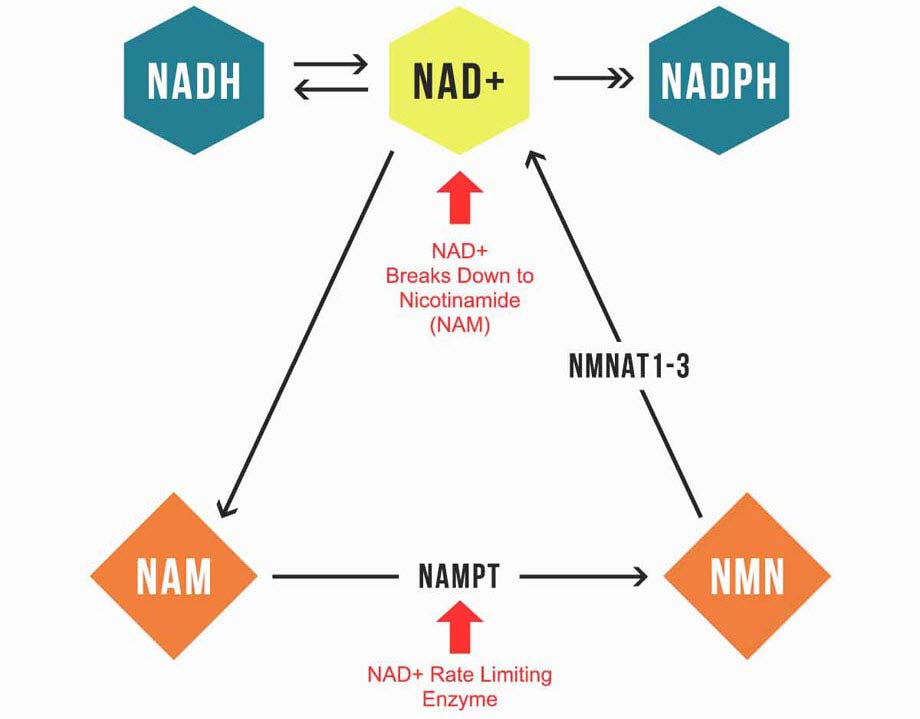
There are three main pathways. The most important pathway for NAD production is something called the NAD salvage pathway. This is because not only can it make NAD from these external raw materials that come into the cell, but it can also recycle NAD as it is broken down.

A key thing that many people don't realize is that when NAD is being used up in all of these beneficial processes in the cell, such as in DNA repair and activating other cellular pathways like the sirtuins, it actually gets broken down into one of its precursors, nicotinamide.

The cell is really clever because what it's evolved to have is this salvage pathway, a recycling pathway for this nicotinamide (niacinamide). Which means that when NAD is used up, it gets broken down in nicotinamide and this nicotinamide then just gets recycled straight back into fresh NAD again.

This makes absolute sense, because why would the body want to rely on generating such a critical molecule using external precursors? It needs to use something endogenous, something that it's always going to have a ready supply of.

This also means that as demand for NAD goes up, more NAD is broken down in to nicotinamide, so technically there's more raw material that can simply be recycled straight back into fresh NAD again. This has been demonstrated to be the most important pathway for NAD production in the body.

So when we're young, we've got this abundant supply of NAD that's continually being recycled via the salvage pathway. Unfortunately, as we get older, NAD declines. There are two main reasons for this. Firstly, more NAD is used up.

When more NAD is used up, this means more needs to be recycled to replenish NAD. But it's also been found that that salvage pathway also declines with age. So right at this point in your life when you've got an increased demand for NAD, you've also got a reduction in the body's ability to regenerate NAD via this recycling route.

When you put those two things together, what you get is an exponential decline in NAD, which is exactly what we see in human tissues throughout life. We see about a 50% reduction in NAD levels in our tissues every 20 years, which is quite shocking considering how important it is to our lives."

How NAD Is Depleted

The thing that depletes NAD the most is when it's acting as a cofactor for other enzymes, such as the sirtuins and DNA repair enzymes. In that role, NAD acts much like a fuel, so it gets used up, causing your level to decline. In its energy production role, it merely flips between states, so the overall amount doesn't really change. The two primary enzymes that consume NAD are:

• Poly ADP ribose polymerases (PARPs), especially PARP1, a DNA repair enzyme — With age, the amount of DNA damage increases, which has to be repaired. One of the key enzymes that repairs this damage is called PARP1. For that enzyme to work, it needs NAD as a fuel. It literally takes NAD and breaks it down to form its reaction in the DNA repair action.

"What you see is that if you've got increased levels of DNA damage in your tissues, you get increased activity of this enzyme and you get NAD depletion," Conlon says. Studies suggest extensive DNA damage within a cell can within five minutes deplete the NAD level in that cell to about 5% to 10% of what it started out with.

One common exposure that causes DNA damage is electromagnetic field exposures (EMFs) from cell phones and wireless technologies. Some studies have shown that every time PARP1 is activated for DNA repair, it consumes 150 NAD molecules.1

• CD38 — Another enzyme called CD38, found on the surface of many immune cells, also consumes about 100 molecules of NAD for every cycle of its reaction. CD38 is a cell signal enzyme involved in sending calcium signals throughout the cell to activate parts of your immune system.

"CD38 is one of the biggest NAD consumer in the body because of the fact that it is so inefficient at using NAD," Conlon says. "It's been found that even if you can inhibit CD38 by just a very, very small amount, you can have a significant impact on NAD levels because it is so inefficient."

The Challenges of Exogenous NAD Supplementation

Unfortunately, boosting NAD is no easy feat either. Many use NR or NMN, but the bioavailability of these is quite poor. It's kind of like swallowing bioidentical hormones. It's the real deal when you swallow it, but your liver has a tendency to want to detoxify and typically conjugates or adds in methyl groups to facilitate excretion. So, they don't really have time to transfer into your blood.

Conlon and her team discovered another way of boosting NAD.

"When we started looking at NAD, the first thing we did was to look for evidence that you could use molecules or supplements to boost NAD. At the time, everyone was looking at enhancing NAD levels with nicotinamide riboside or nicotinamide mononucleotide. which are the precursors or the raw materials that the body uses to make NAD.

But there was no evidence that the reason that NAD was declining was because the body had a lack of availability of these precursors. In fact, still to this day, there's no evidence that our bodies have a reduced capacity to absorb these or that there's a reduced amount circulating in the plasma for the cells to use.

Over the last couple of years, more understanding of NAD decline has emerged. It's clearly now demonstrated that to restore NAD, you need to fix the root causes. You need to fix that salvage pathway. You need to increase the enzymes in that pathway that are actually declining with age so that your body can recycle NAD like it did naturally when it was younger.

You also need to look at these processes that are wasting NAD. You need to look at inhibiting CD38 and stopping chronic low level inflammation that's wastefully using up NAD. You also need to look at reducing DNA damage and being more efficient in its repair so you don't have this constant chronic activation of DNA repair, which is also using up NAD."

Conlon and her team decided to pursue a multi-target strategy. Rather than just putting more raw material into the cell, the aim is to fix the cell. In experiments, they've demonstrated that you can boost NAD levels in the cells without putting any precursor in. You can actually just use ingredients that inhibit CD38 and activate nicotinamide phosphoribosyltransferase (NAMPT). This will boost NAD without having to add more raw materials to the cell.

NAMPT Is a Rate Limiting Enzyme for NAD Production

NAMPT is really important because that's the bottleneck, the rate limiting enzyme for the production of NAD. Conlon explains:

"The reason the salvage pathway declines with age is because of this one key enzyme. NAMPT actually recycles niacinamide and converts it into NMN, which then gets converted back into NAD. The rate limiting step, the bottleneck in that process, is NAMPT. And lo and behold, that is the key enzyme that declines as we get older.

Studies have demonstrated that you get a 50% decrease in this enzyme between the ages of 45 and 60. That's a significant decline considering how important this is for new NAD production. The decline in the levels of this enzyme again correlate with the decline in NAD that we experience.

Many diseases and issues that are associated with NAD decline are found to be because of a reduction in this enzyme. So, it's absolutely critical to try and improve the activation and expression of this enzyme in the body to enhance NAD. It worked brilliantly to give us high NAD levels when we were younger, so why not restore it back to that?"

How Much Does NAD Decline Over Time?

NAD starts declining from the day you're born. For every 20 years thereafter, you lose about 50%. So, by the time you're 20, your NAD level is half of what you had at birth. By age 40, it's halved again from what you had at age 20, and so on. "It's an exponential curve," Conlon says, "Looking in elderly people's tissues, they really don't have very much left." I believe this may be one of the many reasons why elderly people are so susceptible to COVID. Perhaps even a primary one.

Conlon cites research showing SARS-CoV-2 infection does cause massive NAD depletion by over activating the PARPs. While PARP1 is involved in DNA repair, some of the other PARPs are involved in inflammatory responses, and they too need NAD.

"The running theory is that if we're older or sicker we have lower levels of NAD to begin with, so when we get infected, we're already at a lower starting point. So in someone who's younger and healthy and has high NAD, when they get infected, they've already got quite a good level to begin with, so even when they get that depletion, they can get by because they had adequate supplies to begin with.

The other really interesting thing is what the cell does in response to the virus to try and mitigate this. All of the genes that the cell regulates to try and protect itself are all to do with NAD salvage. The body actively tries to increase NAMPT to protect itself because it knows that's the best way to produce NAD and rectify the problem."

NAD Restoration for Optimal Health

According to Conlon, preclinical animal studies have shown NAD restoration really does help reverse disease and improve health span. In humans, using NR supplementation, the benefits have been less stellar. So far, they've not been able to replicate the preclinical models. Conlon suspects this is because NR and other precursors simply don't address the root causes of NAD decline.

“NAMPT is an enzyme, and you can get antibodies which will selectively attach to it. To measure it, we use a Western blot, which basically measures the amount of NAMPT protein that is available in the cell and it shows as a dark band. Basically, the darker the band, the more expression.

Alpa lipoic acid works by increasing the activation of another energy sensor in the body called AMPK. AMPK is a sensor of any energy stress. When there's an energy stress in the body, AMPK goes up and it basically activates NAMPT so that it can increase NAD levels in the cells," Conlon explains.

Best and Least Expensive Way to Improve Your NAD+ Levels

So deeply appreciate Dr. Conlon's insights and expertise on NAD+ precursors. Although I have read dozens if not hundreds of papers on NAD+ the entire subject is confusing and I now realize it is likely because of financial interests that the best precursor is not recommended more frequently. Dr. Conlon has concluded, and I thoroughly agree with her, that the best single NAD+ precursor is niacinamide, not niacin, NR or NMN.

It is now beyond obvious to me why no one is promoting niacinamide. This is because it costs less than one cent a day and as a result there is simply no money to be made in promoting it. Ideally you buy niacinamide powder and use 1 to 1/2 of 1/64th of a teaspoon three times a day (25-50 mg).

You will need special measuring spoons to measure this small a dose. This is important as more is most definitely not better and much worse. If you use too much you will actually inhibit sirtuins which are important longevity proteins.

Spending $11 on 250 grams of niacinamide powder will give you a nearly four year supply of niacinamide. That pencils out to 23 cents a month or less than one penny a day. It is basically free. NMN in therapeutic doses of 1-2 grams/day can be one to two hundred dollars a month or 400-800X more expensive than niacinamide powder.

So let me review the reasons why Dr. Conlon and I both are convinced that niacinamide is the best NAD+ precursor. The immediate breakdown product of NAD+ is niacinamide and the enzyme NAMPT is the rate limiting enzyme in the salvage pathway to restore niacinamide back to NAD+. As you can see by the pathway below niacinamide is actually first converted to NMN before NAD+. This is likely why researchers like David Sinclair and others promote NMN.

However the enzyme NMNAT1-3 that converts NMN to NAD+ is not the rate limiting enzyme. Recall that NAMPT is what controls how much NAD+ you make. So you flooding your body with NMN is not going to be as useful as using small amounts of niacinamide and activating NAMPT as discussed below. Ideal dosing of niacinamide is from 25 to 50 mg three times a day. It is the rare person that will not respond favorable to this simple intervention for increasing NAD+.

NAD+

Synergistic Lifestyle Strategies

While supplementation can be very valuable, it's not a magic bullet. In most cases, supplementation needs to be done in conjunction with other healthy lifestyle changes for lasting, optimal results. So, to boost and maintain youthful NAD levels, consider the following healthy lifestyle strategies:

  • Physical exercise — Naturally increases NAMPT by activating AMPK, which in turn increases NAD. Conlon cites research showing about three weeks of resistance training will boost NAMPT by about 127%, which again is far greater than what you can get from an NR supplement alone.
  • Fasting or time-restricted eating — Naturally increases NAMPT by activating AMPK, which in turn increases NAD.
  • Circadian rhythm optimization by going to bed at sunset and getting up at sunrise and avoiding blue light after sunset will have profound impacts on increasing NAMPT.
  • Avoid radiation exposure — To protect your NAD by preventing its consumption by PARPs, consider avoiding EMFs in the form of your cell phone and Wi-Fi and other forms of DNA damaging radiation, such as unnecessary medical x-rays and CAT scans.
  • Sauna bathing — Heat stress also helps boost NAD.

Considering you can't really measure your NAD level, how can you your levels are improving? Conlon replies:

"We have three things that people always report back on. The first is energy levels, which is not surprising whatsoever given the key role that NAD has in the body of producing our energy. It's not an energy boost where people feel wired... It's more like having enthusiasm about the day — more 'get up and go.'

The other thing is mental clarity and focus. And the final thing is sleep. NAD levels are actually circadian and cyclical and can fluctuate throughout your day ... As you get older and NAD levels decline, the peaks and troughs of NAD decline too which can hamper your circadian rhythm, which means your sleep quality isn't as good. Those are the three main things."

I have a very optimized lifestyle that optimizes my NAD+ to youthful levels. I do this through an 18-hour daily fast in which I start my resistance training, and most days will follow that with an EMF-free sauna at 160 degrees F. for 20 minutes. I currently use 50 mg of the niacinamide powder I described above.

Even though I am rapidly approaching 70, my levels are that of someone much younger because of the activities I engage in that radically upregulate NAMPT. If you want to optimize your levels of NAD+, I encourage you to incorporate some of these strategies.


from Articles https://ift.tt/mLycYKr
via IFTTT

This article was previously published November 18, 2019, and has been updated with new information.

Magnesium1 is involved in hundreds of biochemical reactions in your body,2,3 and deficiency can contribute to significant health problems. Two common pathologies associated with magnesium deficiency are Type 2 diabetes4,5 and heart disease.

According to one scientific review,6 low magnesium may actually be the greatest predictor of heart disease, and other recent research7 published in Open Heart journal suggests even subclinical magnesium deficiency can compromise your cardiovascular health.

As noted in a 2018 scientific review8,9 published in Open Heart journal, a "vast majority of people in modern societies are at risk for magnesium deficiency" due to "chronic diseases, medications, decreases in food crop magnesium contents, and the availability of refined and processed foods."

According to this review, most fail to meet the recommended daily allowance (RDA) for magnesium; 48% of Americans do not get sufficient magnesium from their diet. Among postmenopausal women with osteoporosis, the rate of magnesium deficiency is 84%.10

Type 2 diabetics also tend to be more prone to magnesium deficiency, and magnesium depletion has been found in 75% of patients with poorly controlled Type 2 diabetes, the review states.11

Magnesium Protects Your Heart Health

Low magnesium has been linked to a higher risk for high blood pressure,12 stroke13 and sudden cardiac death.14 According to the Open Heart study authors,15 "most people need an additional 300 mg of magnesium per day in order to lower their risk of developing numerous chronic diseases," and this includes heart disease and diabetes. Magnesium supports healthy heart function and helps prevent heart disease by:16

  • Combating inflammation, thereby helping prevent hardening of your arteries
  • Normalizing blood pressure
  • Improving blood flow by relaxing your arteries and preventing your blood from thickening, allowing it to flow more smoothly

Magnesium Status Impacts Diabetes and Blood Pressure

Magnesium also plays an important role in diabetes, and this is not nearly as recognized as it needs to be. Low magnesium levels have been linked to a higher risk of insulin resistance, a precursor to Type 2 diabetes,17 as it impairs your body's ability to regulate blood sugar, which is important for the prevention of Type 2 diabetes.18,19,20,21

In one study,22 prediabetics with the highest magnesium intake reduced their risk for blood sugar and metabolic problems by 71%, compared to those with the lowest intake. High levels of insulin in the blood, common with insulin resistance, also lead to further loss of magnesium.23

Most recently, a study24 published in October 2019 in the online issue of Diabetes Research and Clinical Practice again linked low magnesium levels with both diabetes and high blood pressure, both of which are risk factors for heart disease. As reported by the authors:25

"Across the quartiles of serum magnesium from high to low, the prevalence ratios for diabetes were 1.00, 1.35, 1.88, and 2.70, respectively. The presence of hypertension significantly increased the probability of diabetes along a wide range of low serum magnesium. A low intake of MRDP [magnesium related dietary pattern] was also positively associated with diabetes and high HbA1c."

Other Studies Linking Magnesium Status to Diabetes Risk

An earlier meta-analysis,26 published in 2007, also found that magnesium intake was inversely associated with Type 2 diabetes incidence. This analysis included seven cohort studies looking at magnesium from either food or diet and supplements combined. According to the authors:

"All but one study found an inverse relation between magnesium intake and risk of Type 2 diabetes, and in four studies the association was statistically significant.

The overall relative risk for a 100 mg day increase in magnesium intake was 0.85. Results were similar for intake of dietary magnesium and total magnesium. There was no evidence of publication bias."

Magnesium supplementation not only can lower your risk of Type 2 diabetes, but also has been shown to improve your condition if you already have full-blown diabetes. This was demonstrated in a 2018 study27 in the journal Nutrients.

Type 2 diabetics who took 250 milligrams (mg) of magnesium per day for three months saw a significant improvement in insulin levels and HbA1C (hemoglobin A1c, which is a marker of long-term glucose control) compared to controls.

As noted by the authors,28 "The results of this study matched previous studies that concluded that daily oral Mg supplementation substantially improved insulin sensitivity by 10% and reduced blood sugar by 37%."

Are You Deficient in Magnesium?

The best way to ascertain your magnesium status is to do an RBC magnesium test, which measures the amount of magnesium in your red blood cells, along with tracking any signs and symptoms of magnesium deficiency, such as:29,30

Seizures; muscle spasms, especially "charley horses" or spasms in your calf muscle that happen when you stretch your leg, and/or eye twitches

Numbness or tingling in your extremities

Insulin resistance

High blood pressure, heart arrhythmias and/or coronary spasms

Increased number of headaches and/or migraines

Low energy, fatigue and/or loss of appetite

The Trousseau sign31 — To check for this sign, a blood pressure cuff is inflated around your arm. The pressure should be greater than your systolic blood pressure and maintained for three minutes.

By occluding the brachial artery in your arm, spasms in your hand and forearm muscles are induced. If you are magnesium deficient, the lack of blood flow will cause your wrist and metacarpophalangeal joint to flex and your fingers to adduct (illustrated in the video below).

A more exhaustive list can be found in Dr. Carolyn Dean's blog post, "Gauging Magnesium Deficiency Symptoms,"32 which will give you a checklist to go through every few weeks. This will also help you gauge how much magnesium you need to resolve your deficiency symptoms.

Get Tested Today

GrassrootsHealth, which is conducting consumer-sponsored research into vitamin D and omega-3, has now added magnesium to its nutrient research.

Their Vitamin D, Magnesium and Omega 3 PLUS Elements test kit is an excellent and cost-effective way to check the status of several vital nutrients, along with the essential minerals selenium, zinc and copper and the harmful heavy metals cadmium, lead and mercury.

Each kit contains instructions for how to collect your blood sample. You then mail in your sample and fill out a quick online health questionnaire through GrassrootsHealth.

Your participation in this research project will enable GrassrootsHealth researchers to provide accurate data about the magnesium status in the population, the level at which disease prevention is actually obtained, and guidance on dosing to achieve optimal levels.

All of this is crucial information that can go a long way toward improving public health. As explained by GrassrootsHealth, questions about magnesium that this particular project aims to provide answers for include:33

  • What specific health outcomes are associated with this nutrient for me, for the total group?
  • How can I figure out how much to take? What's the dose-response relationship for all? For me?
  • Does it matter if I'm also taking vitamin D? Omega-3?
  • Does it matter what compound of this nutrient I take? What time of day? How often?
  • What are the demonstrated health outcomes used to create this nutrient's recommended range?

Your test results will be emailed to you in about 10 to 20 days after your samples are received. Your health data are used anonymously. Please note that 100% of the proceeds from the kits go to fund the research project. I do not charge anything extra as a distributor of these test kits.

Why Most People Need More Magnesium

One of the reasons why magnesium insufficiency or deficiency is so common, both among adults34 and teens,35 is in part due to the fact that most people don't eat enough plant foods. Magnesium is actually part of the chlorophyll molecule responsible for the plant's green color.

If you frequently eat processed foods, your risk of deficiency is magnified. That said, even if you eat plenty of greens you might still need to take a supplement, as most foods are grown in mineral-depleted soils and are thus much lower in magnesium than they have been historically.

Magnesium absorption is also dependent on having sufficient amounts of selenium, parathyroid hormone and vitamins B6 and D, and is hindered by excess ethanol, salt, coffee and phosphoric acid in soda.

Sweating, stress, lack of sleep, excessive menstruation, certain drugs (especially diuretics and proton-pump inhibitors) also deplete your body of magnesium.36 For these reasons, most people probably need to take supplemental magnesium. Taking a magnesium supplement is particularly advisable if you:37

Experience symptoms of insufficiency or deficiency38

Have high blood pressure

Engage in strenuous exercise on a regular basis — Research39 shows just six to 12 weeks of strenuous physical activity can result in magnesium deficiency, likely due to increased magnesium demand in your skeletal muscle

Are taking diuretics or medication for high blood pressure, especially thiazides, which have been shown to induce undetectable magnesium deficiency40 (while patients may have normal or even high serum magnesium, their bodies are actually depleted of magnesium)

Have had or are planning heart transplant or open heart surgery

Are at risk for or have had a heart attack, or if you experience ventricular arrhythmia

Have congestive heart failure

Are insulin resistant or diabetic (as this increases magnesium depletion)

Eat More Magnesium-Rich Foods

The recommended dietary allowance for magnesium is around 310 to 420 mg per day depending on your age and sex,41 but many experts believe you may need 600 to 900 mg per day.42

Personally, I believe many may benefit from amounts as high as 1 to 2 grams (1,000 to 2,000 mg) of elemental magnesium per day, as most of us have electromagnetic field exposures that simply cannot be mitigated, and the extra magnesium may help lower the damage from that exposure.

If your veggie consumption is low to begin with, consider including more magnesium-rich vegetables in your daily diet. Dark-green leafy vegetables lead the pack when it comes to magnesium content, and juicing your greens is an excellent way to boost your intake.

Other foods that are particularly rich in magnesium include natto, raw cacao nibs, unsweetened cocoa powder, avocados, pumpkin and sesame seeds, and herbs like chives and basil.43 One way to check your daily magnesium intake from foods is to use a free online nutritional tracker such as Cronometer.

Other Ways to Boost Your Magnesium Level

If your magnesium intake from food is found lacking, it would certainly be wise to supplement, either orally or topically. For oral supplementation, my personal preference is magnesium threonate, as it appears to be the most efficient at penetrating cell membranes, including your mitochondria and blood-brain barrier.

As a general rule, I recommend starting out on a dose of 200 mg of oral magnesium citrate per day, gradually increasing your dose until you develop slightly loose stools. To use this method, you need to use magnesium citrate, as it's known for having a laxative effect. Once you know your cutoff, you can switch to other forms if you like. Other effective ways to boost your magnesium level include:

• Taking Epsom salt (magnesium sulfate) baths, as the magnesium will effectively absorb through your skin.

• Using a topical solution — I prepare a supersaturated solution of Epsom salt by dissolving 7 tablespoons of the salt into 6 ounces of water and heating it until all the salt has dissolved. I pour it into a dropper bottle and then apply it to my skin and rub fresh aloe leaves over it to dissolve it.

This is an easy and inexpensive way to increase your magnesium and will allow you to get higher dosages into your body without having to deal with its laxative effects.

Magnesium can be taken with or without food. If you're also taking calcium, take them together. If you exercise regularly, consider taking your calcium and magnesium in a ratio of one part calcium to two parts magnesium with your pre-workout meal.

While the ideal ratio of magnesium to calcium is thought to be 1-to-1, most people get far more calcium than magnesium from their diet; hence, your need for supplemental magnesium may be two to three times greater than calcium.


from Articles https://ift.tt/By621dq
via IFTTT

Intestinal epithelial cells line the inner wall of the gut, creating a barrier to dangerous bacteria like enteropathogenic E. coli that seek to attach and efface that barrier, causing diarrhea. Such pathogens pose significant risks to human health and cause infant death in developing countries. A new study shows how two types of immune cells -- one a part of the innate immune system and the other a part of the adaptive immune system -- play distinct and indispensable roles to defend that barrier.

from Top Health News -- ScienceDaily https://ift.tt/KMwcj96

Researchers have used CRISPR gene editing -- a type of 'molecular scissors' -- to understand how deletions in one area of the genome can affect the expression of nearby genes. The work will help researchers investigate new therapeutic approaches for one of the world's most devastating genetic blood disorders -- sickle cell disease. Asymptomatic sickle cell disease patients actually lack a tiny part of the genome, scientists have shown.

from Top Health News -- ScienceDaily https://ift.tt/S6QhWyD

MKRdezign

Contact Form

Name

Email *

Message *

Powered by Blogger.
Javascript DisablePlease Enable Javascript To See All Widget