Health, Fitness,Dite plan, health tips,athletic club,crunch fitness,fitness studio,lose weight,fitness world,mens health,aerobic,personal trainer,lifetime fitness,nutrition,workout,fitness first,weight loss,how to lose weight,exercise,24 hour fitness,
Labels
Technology
New Post
[recent][newsticker]
Latest Post
Top Health News -- ScienceDaily
Aging
Alzheimer's
Articles
Articles : Asthma
Articles : CAFO
Articles : Children's Health
Articles : Cholesterol
Articles : Emotional Health
Articles : Fibromyalgia
Articles : GMO
Articles : Heart Health
Articles : Hormones
Articles : Internal Videos
Articles : Interviews
Articles : Men's Health
Articles : Politics
Articles : Thyroid Disease
Articles : Vaccines
Autism
best natural health source
Children's Health
Detoxification
Diabetes
Diet | body+soul
Diet and Weight Loss News -- ScienceDaily
Digestive Diseases
Dite
Dite & weight loss
Drug Industry
Drugs
EFT
EMF
Emotional Health
Finances
fitness
Fitness | body+soul
Fitness/Exercise
Fluoride
Food
Fructose/Sugar
Gardening
Harvard Health Blog
Health
Health | body+soul
Health and Wellness
health news
health tips
Heart Health
information
Joint Support
Juicing
Men's Health
news
Nutrition
Nutrition | body+soul
Pollution
Raw Milk
Soy
Supplements
Swine Flu
Technology
Thyroid Disease
Top Health
Top Health News -- ScienceDaily
Under Armour
Vaccines
Weight Management
women's health
Women's Health News -- ScienceDaily
work place health
Workplace Health News -- ScienceDaily
Every major change for Melbourne’s new lockdown laws, as of today
Victorian Premier Daniel Andrews has lifted more coronavirus restrictions as of 11.59pm on November 8. Here’s everything you can and can’t do.
from Health | body+soul https://ift.tt/2U4dyx1
from Health | body+soul https://ift.tt/2U4dyx1
Why consumers think pretty food is healthier
People tend to think that pretty-looking food is healthier (e.g., more nutrients, less fat) and more natural (e.g., purer, less processed) than ugly-looking versions of the same food.
from Top Health News -- ScienceDaily https://ift.tt/3eBsxYK
from Top Health News -- ScienceDaily https://ift.tt/3eBsxYK
Large-area flexible organic photodiodes can compete with silicon devices
The performance of flexible large-area organic photodiodes has advanced to the point that they can now offer advantages over conventional silicon photodiode technology, particularly for applications such as biomedical imaging and biometric monitoring that require detecting low levels of light across large areas.
from Top Health News -- ScienceDaily https://ift.tt/3nhHbrl
from Top Health News -- ScienceDaily https://ift.tt/3nhHbrl
Ketones Combat Inflammation and Improve Metabolic Function
In this interview, Dr. William Seeds, an orthopedic surgeon, reviews how to optimize your metabolic function, improve cellular efficiency and make you more resilient against respiratory viruses using ketones — a topic previously discussed in my recent interview with Travis Christofferson, who wrote the book “Ketones: The Fourth Fuel.”
“My science background has been cellular molecular biology and biochemistry, so that's something I've been deeply involved with for the last 35 years,” Seeds says.
“It's parlayed into orthopedics, my specialty, because of tissue healing and optimizing cell efficiency and the flexibility of the cell to improve tissue healing in what we do surgically. So, it's always played an integral role in what we've tried to do to optimize patient outcomes.”
How Ketone Esters Control Inflammation
Ketones are water-soluble fats that have powerfully beneficial metabolic benefits and also aid in tissue healing. Ketone esters are a convenient way to increase ketones and are helpful in cases of viral infections such as COVID-19, as they reestablish cellular homeostasis, provide rapid energy, recharge your antioxidants and control oxidation within the cell.
“We're looking to reestablish the homeostasis of the cell, which is basically the redox of the cell, and that is very important in controlling an inflammatory state like COVID-19.
The premises behind what these ketone esters do is they have the ability to give the cell an immediate energy source that doesn't utilize a lot of energy to use it. This helps a cell produce more ATP, more energy, that it may need to function where it is in a higher state of activity because of its stressors it's working against.”
How Ketones Improve Antioxidant Levels
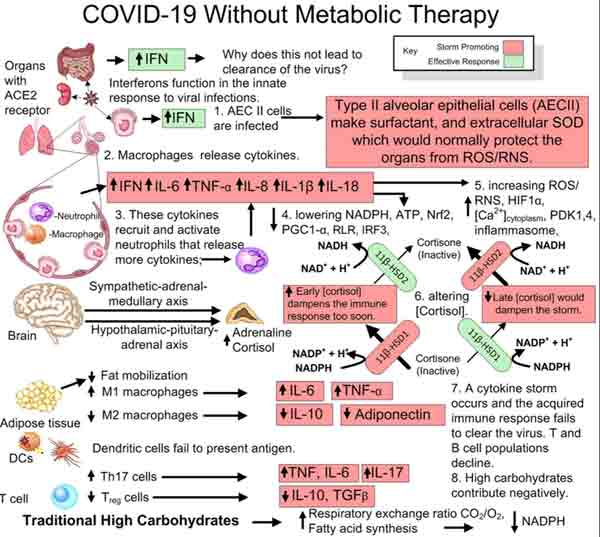
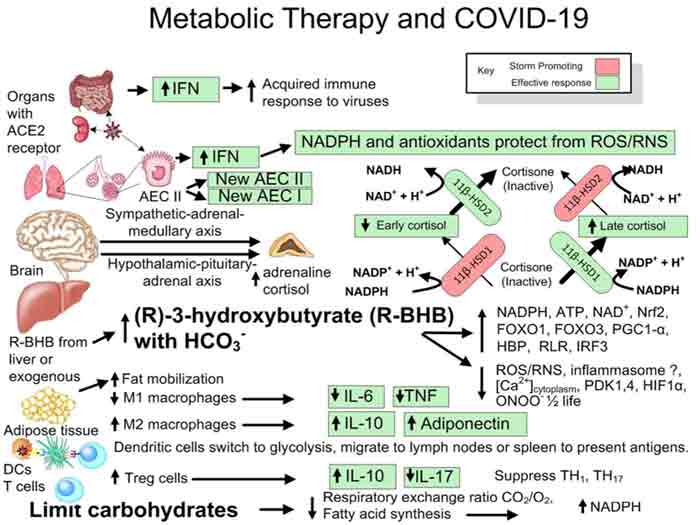
Ketones also increase nicotinamide adenine dinucleotide phosphate hydrogen (NADPH), a powerful metabolic co-factor that improves your body's ability to recharge antioxidants like superoxide dismutase, catalase, glutathione peroxidase and hexokinase-1 to their functional state by donating an important reducing electron.
NADPH, in my view, is probably one of the most important biomolecules in your body, right up there with NAD+ and ATP. It is the primary way your body recycles its antioxidants. It essentially transfers electrons to them to help reduce excessive oxidative stress.
This is important because once those antioxidants are used, whether produced endogenously or taken exogenously in a supplement, they no longer work. They need to be recharged, which is what NADPH does. This explains why many studies that have attempted to show benefit from taking high dose antioxidants fail.
When antioxidants are taken as supplements they have the potential to indiscriminately suppress beneficial free radicals, but when you recharge antioxidants with NADPH, your body is able to selectively and wisely discriminate between the specific free radicals you want eliminated. There are beneficial free radicals, such as nitric oxide, that you don’t want to eliminate. Seeds agrees, adding:
“The key is understanding that you're benefiting your endogenous antioxidant system versus exogenously taking supplements that are potentially reducing your equivalents. Your cells are inherently intelligent and understand how to utilize these ratios of NADP over NADPH and NAD over NADH.
It's giving the cell back the ability to become efficient and flexible. As you reduce glutathione peroxidase, it goes out there and takes care of superoxide or any other type of possible free radical.
Then that will take those electrons but then it has to be changed again, it has to be reduced again to be active and that is the critical part of understanding this — especially in states of high demand, like COVID-19, where you've got, for instance, the alveolar type 2 cells that are highly metabolically active that are producing superoxide dismutase in the lung area that needs to work against the free radical process produced by cytokine storm and so forth.
You have to have the ability to constantly provide that NADPH or you're in trouble. Whether it's a cytokine storm or an increased oxidative state, this is how we get into trouble and how this leads to metabolic diseases, immune diseases and so forth.”
Ketones Suppress Proinflammatory Pathways
In addition to increasing NADPH, ketones also suppress inflammatory pathways present as a result of an infection. Infection initiates an inflammatory cascade of proinflammatory cytokines. One of the benefits of ketone augmentation, either endogenous or exogenous, is that it suppresses potent proinflammatory pathways like NRLP3.
As explained by Seeds, the NRLP3 process is all about activation of the inflammasome. NF kappa B is a transcription factor in the nucleus of the cell responsible for initiating the production of proinflammatory cytokines such as interleukin-1 beta, interleukin-6 and TNF alpha. The overproduction of these cytokines by your immune system is what results in a proinflammatory state.
In addition to boosting NADPH, ketones can also elevate NAD+, which in turn upregulates SIRT genes, SIRT3 in particular, that directly control inflammation. SIRT3 deacetylates inflammasome and decreases the production of pro-inflammatory cytokines.
“These proinflammatory agents we're talking about, interleukin-1 beta, tumor necrosis factor alpha and interleukin-6, are necessary for normal cell activity but higher levels are what need to be controlled. So, we're giving the cell the nutrition it needs to make intelligent decisions of how to utilize what it has to control the environment when the cells is getting out of is homeostatic pattern.”
In addition to SIRT3, SIRT1 and SIRT2 are also important, and they tend to be activated by beneficial nutrients that we take in our diets, such as resveratrol. However, SIRT1 is useless unless NAD+ is high enough. And, as explained by Seeds, when you upregulate SIRT1, you also upregulate AMPK, which in turn improves mitochondrial biogenesis.
SIRT2, meanwhile, is activated by a polyphenol flavonoid called quercetin. I believe quercetin may be a superior alternative to hydroxychloroquine because not only does it act like a zinc ionophore to increase zinc levels inside the cell but it also activates SIRT2 and has beneficial effects on inflammasome.
The two graphics below are from the paper Seeds wrote, describing the effects of metabolic therapy on COVID-19.1
Exogenous Ketone Esters for Respiratory Infections
There are strategies to boost your endogenous ketone levels — such as following a cyclical ketogenic diet and taking C8 (caprylic acid) MCT oil — which is what I prefer. This typically takes more time and commitment but is far less expensive, as ketone esters are typically about $1 per gram and a therapeutic dose can range from 5 to 25 grams.
Seeds typically uses exogenous ketones such as 1,3-butanediol beta-hydroxybutyrate, which is available in products like KetonAid. This strategy has high compliance and helps you achieve more rapid change in ketone levels and ketosis, and allows for greater precision but is costlier.
“All you need is 5 grams to elevate your endogenous production of almost 1 millimole (mmol/L) of ketosis,” Seeds says. “If you [take], let's say 25 grams, you'll get that to 3 to 5 mmol/L … that will be around for about three to four hours. We believe that range, anywhere above 1 mmol/L is going to be effective initially, to see those changes [in] NADPH, NAD and the inflammasome action.
Now, in our treatment of people that are directly in a COVID-19 situation where we're trying to treat respiratory problems and want a higher millimole concentration, we're going to use the 25 mg [dose] to get that 3 to 5 mmol/L concentration.
What we're truly working on is relieving that bronchial constriction and working on changing the calcium balance of that excitation coupling that's happening with the muscle around the bronchials. That's why the ketone esters have been so effective for us because we get a very quick improvement in that bronchial dilatation.
That's been absolutely a wonderful tool for us as physicians to be able to utilize early on, when people are feeling that chest tightness and having some early respiratory changes. We've done it also on the back end of COVID-19, where people who have been treated are still having respiratory and fatigue issues.”
Through his peptide society, the SSRP Society,2 he’s been able to work with hundreds of U.S. doctors, describing these protocols and how exogenous ketones can be used in early treatment of COVID-19, and as a prophylactic. In many cases, a patient’s respiratory status can be improved within minutes.
The use of ketones is one of three interventions that I'm convinced can have nearly immediate benefit. The other two are molecular hydrogen and nebulized hydrogen peroxide. Each one of these can provide near-miraculous benefits in a very short amount of time.
Key Notes on MCT Oil and Carb Intake
We also discussed the use of C8 caprylic acid in greater depth in the interview, which is the most effective form of MCT oil, so for more details, please listen to the interview. We also discuss the use of ketone esters in professional athletics.
One fascinating fact brought up by Seeds is that they now have evidence showing that taking C8 MCT oil about 20 minutes before radiation exposure, such as an X-ray or flying in a commercial aircraft, can inhibit 100% of the radiation damage.
Another important aside is that when you take MCT oil or ketone esters, their efficacy will be significantly increased if you cut down on carbohydrates. There’s a big difference in the blood ketone levels you can achieve taking either of them with a high-carb diet, a low-carb diet or when fasting. Fasting will raise your ketone blood levels the most.
Lowering Inflammation With Baking Soda and Alka-Seltzer Gold
Seeds also segues into a discussion about how good old-fashioned baking soda and Alka-Seltzer Gold can be used to squelch excessive inflammation at the molecular level, as bicarbonate immediately neutralizes peroxynitrites, which are among the most damaging free radicals there are. Seeds summarizes a typical regimen:
“I like the Alka-Seltzer Gold — it has to be that specifically, as it doesn't have the aspirin in it. I'll have people take it just to build up their bicarb level. Take two tabs in the morning, two tabs in the middle of the day and two tabs at night. I'll have them do that for about three days to a week, and then I have them go down to just doing two tabs a day.
If you're using baking soda by itself, I'll have people start with a half a teaspoon3 about every three hours. I'll have them do six doses a day for a few days, and then go to a full teaspoon, three times a day for a few weeks … That's been an easy prophylaxis, and we utilize bicarb in many other aspects too, in immune diseases and so forth.”
While simple baking soda (sodium bicarb), as Seeds recommends, will work, I personally use and recommend using potassium bicarb. You can purchase it inexpensively in pound quantities at nuts.com.
The key to using it effectively is to pick up some litmus pH paper and regularly monitor your urine. Ideally, your pH should be about 7. Without the bicarb it will likely be 6 or even lower. I use about one-half teaspoon three to four times a day based on my urine pH.
This is a powerful strategy I would encourage nearly everyone to adopt as by keeping your urine pH around 7 with the bicarb you will avoid having to neutralize the acidity with either amino acids from your muscles or calcium and other minerals from your bones. This is a simple inexpensive habit that can go a long way to improving your health
Bicarbonate Improves Cellular Power Output
Bicarb also works well together with ketone esters, as the bicarbonate improves the power output of the cell. This can be particularly useful for athletes. Seeds explains:
“It takes it to a new level. Bicarbonate absolutely improves the power output of the cell, of the muscle, just based on improving the ability to work against the buildup of lactic acid over time. It's just improving [athletes’] ability to perform longer, and when you combine ketones and bicarbonate, you've all of a sudden changed the playing field.
You're still getting the signaling of that lactic acid process. You're not affecting what the lactic acid is important for in the brain, because that’s what's going to improve the increase in insulin for you also. The key here is understanding that you're not changing signaling. All you're doing is controlling the pH of the cell …
The signaling is of utmost importance for improving insulin to improve the utilization of glucose. So, it's just a really amazing circle, and if you understand these pathways, you've got some tremendous tools that are WADA [World Anti-Doping Association] approved. There are no stipulations against any of this type of stuff.
When we're giving bicarb, that's going to challenge the ionic change of the hydrogen ions that are going to be produced. It's going to be able to challenge that instead of going into the muscle and taking glutamine, and then to the liver to produce ammonia to balance out the pH. And so, we're preserving muscle. We're preserving bone.
Let me take this a step further, if I can. Diets today are set up to destroy that acid base metabolism and over time — what I just described — is what's happening. You get a slow leak of loss of amino acid from the muscle.
We've studied it based on nitrogen produced in the urine, and the kidney has to make up for this acid buildup because of the protein buildup. It has to deal with it by taking amino acids from muscle or alkali from bone.
So, we've got this strategy of utilizing bicarb that changes that. It stops osteopenia. It stops sarcopenia, and on top of it, it's got these other aspects of improving cell metabolism.”
More Information
To learn more about Seed’s practice and how he’s revolutionizing medicine with peptide therapy, see Seeds.md. He’s also written a book on peptide protocols — which is a discussion we did not cover in this interview — and how they can improve metabolic function and cellular efficiency. “Peptide Protocols: Volume One” was released August 24, 2020, and can be found on Amazon.com.

from Articles https://ift.tt/32laWz5
via IFTTT
The Interconnectedness Between Anxiety and Inflammation
Dr. Mercola Interviews the Experts
This article is part of a weekly series in which Dr. Mercola interviews various experts on a variety of health issues. To see more expert interviews, click here.
Dr. David Hanscom, an orthopedic surgeon whom I’ve previously interviewed about strategies for chronic back pain, quit his practice to focus on educating others on becoming pain-free without surgery. Most recently, after surviving COVID-19, he turned his attention to prevention and surviving it, which is an important part of this discussion.
We've known for some time now that with diet, exercise and other interventions, you can radically reduce your risk of COVID-19. The focus of Hanscom’s COVID-19 prevention is on strengthening immune function through stress and anxiety reduction, and he has very specific and precise recommendations on how to do that.
As explained by Hanscom, pain is largely a symptom of stress and anxiety, which in turn are predicated on inflammation more so than psychological factors.
“You have to feel safe. When you feel safe, there's a profound shift in your body's chemistry. You're going from adrenalin, cortisol, histamines and inflammatory cytokines to growth hormone, dopamine, serotonin and GABA — all these incredible hormones and anti-inflammatory [compounds]. So, there's a profound shift in the body's chemistry, and people's pain disappears. They don't just manage the pain. The pain disappears.”
Cytokines, Anxiety, Pain and Poor Immune Function
Cytokines are small proteins that serve to regulate different tissues. There are both proinflammatory and anti-inflammatory cytokines. Cytokines have specific relevance to COVID-19, as they modulate your immune system and its function.
By reducing or resolving stress and anxiety, you lower levels of inflammatory cytokines, thereby allowing your immune system to function better. Hanscom has developed a working group that meets once a week to discuss and share information.
Other members of the group include Stephen Porges, Ph.D., a behavioral neuroscientist who developed Polyvagal 30, and Dr. David Clawson, a podiatrist who is very knowledgeable about cytokines.
“Cytokines are everywhere. Every cell in the body has cytokines. It's how they talk to each other. It turns out that the glial cells in your brain, that connect the tissue of the brain, put out cytokines. So do the endothelial cells, the linings of blood vessels.
When you have a threat — surgeons think in terms of muscle tension, sweating and heart rate — that to us is a threat response, versus safety where you relax and regenerate. What I didn't realize is that threat fires up the immune system, and ‘threat’ is all sorts of stuff. It's viruses, bacteria, cancer cells, a bully, a difficult boss, but also your thoughts, emotions and repressed emotions.
Neuroscience has shown us that those thoughts and emotions are processed in the brain the same way as a physical threat. It turns out that every degenerative disease is, what Clawson says, the same soup. In other words, we know that cardiac disease, critical vascular disease, adult onset diabetes, obesity, Parkinson's and Alzheimer's are just examples of inflammatory disorders. It's all inflammatory.”
Anxiety Is a Symptom of Inflammation
When your autonomic nervous system becomes dysregulated, you can — as Hanscom did — go from feeling fine one day to having a panic attack out of the blue the next. He explains:
“It turns out that anxiety, bipolar, depression and schizophrenia are all inflammatory processes. It's inflammatory. It is not psychological. Remember, anxiety is a result of a threat. [Threat] is the cause.
The threat creates a bodily response, which includes your immune system, and that sensation generated by the adrenalin and cortisol and these inflammatory cytokines, that's the sensation of anxiety. Since the unconscious brain processes about 20 million bits of information per second, and the conscious brain only processes 40, you can't do it with mind over matter.
I went to a psychiatrist for 13 years and talked and talked and talked … but I got worse. And, see, the solution for chronic pain is actually changing your brain to go a different direction. If you talk about the problem, you're actually reinforcing it.
The way you decrease anxiety is simply decrease that stress response. And you do it through direct means: Mindfulness, meditation, relaxation, anti-inflammatory diet. The anti-inflammatory diet turns out to be a huge deal … because what happens when you're in a constant threat, i.e., inflammation, which includes processed foods, these inflammatory cells start destroying your body …
The biggest message I want to get out there [is that] anxiety is a physiological response to a threat. Your whole body is on fire. You need to decrease anxiety, decrease cytokines, decrease that stress response. Again, if your body's inflamed, you're going to feel anxious.”
With regard to diet, there are several reasons for why processed foods cause inflammation. For starters, they tend to be very high in refined carbohydrates which, when consumed in excess, causes insulin resistance, thereby raising inflammatory cytokine production and massively increasing your risk of COVID-19. They’re also loaded with industrially processed omega-6 vegetable oils, which are proinflammatory.
Lowering Inflammation Improves COVID-19 Survival
According to Hanscom, removing the threat and creating a sense of safety not only lowers inflammatory markers and eliminates pain, it also improves your immune system’s ability to respond appropriately to fight off foreign invaders, be it SARS-CoV-2 or any other pathogen.
“The virus, of course, is the threat, [and] you want your immune system to respond. A vast majority of people fight off the virus very quickly, but the elephant in the room, the obvious factor that has to be looked at, is that almost every person that dies from COVID-19 has ‘risk factors’ … [and] every one of these risk factors has elevated inflammatory markers.
The idea is, if you take charge of your health and lower those inflammatory markers, then we have this normal cytokine rise. In other words, the cytokines are your defense against the [virus]. We have this normal cytokine rise that stays below that threshold.
If you hit a certain threshold, the inflammatory response becomes too strong, and you flood your lungs out. You drown in your own fluids, because everything becomes inflamed. Almost every person that's passed away from COVID-19 has had some risk factor where this inflammatory process is going out of control.”
The Vagus Nerve
As explained by Hanscom, your vagus nerve, the 10th cranial nerve which is the main part of your parasympathetic nervous system, acts as a brake on your sympathetic nervous system. Your sympathetic nervous system is activated in response to threats, whereas your parasympathetic nervous system is activated through the relaxation response.
“The Vagus nerve is seeing all this input, and it decides what to do with your body. There's a direct effect on metabolism, the endocrine system, your blood sugars, the cytokines. Under threat, the parasympathetic brake comes off … There's two parts to the vagus nerve. The ventral part is connected to facial and neck muscles. It allows humans to socialize. It's called coregulation.
Instinctively we're a competitive species; we want to stay alive. When I walk up to you, I look at your facial expressions, you look at mine, and we do what's called coregulation, which calms down the autonomic nervous system. The problem with COVID-19 is we have masks on. We can't see each other's faces and we're socially isolated. As Porges points out, it dysregulates the autonomic nervous system.
When I had my panic attack, it was a dysregulated autonomic nervous system, and there was this huge sympathetic charge of inflammatory cytokines. There's some question as to whether my panic attack was a cytokine storm, and then, once that happened, I couldn't control it.
Again, it's 20 million bits of information per second, compared to 40. The vagus nerve is the middle of this whole thing. What I'm excited about is that we look at stress as a psychological construct, and it is not. Remember, stress management is a misnomer, because the stress that's most stressful is the stress that you can't manage. It's a chronic stress.
What happens is, when you're under chronic threat, your immune system is fired up. Then people become socially isolated, which also fires up the immune system even more. You can't coregulate, you're socially isolated, your nerve conduction doubles, you feel the pain more, and when this autonomic response is sustained, there are over 30 physical symptoms that occur.
I had 17 of these at the same time. I had migraine headaches, ringing in my ears, skin rashes, stomach issues, back pain, neck pain, burning in my feet, it just went on and on and on. I had no idea what's going on. Again, the sensation is anxiety, which is not psychological, it's physiological.
Stress isn't the problem. It's this physiological response to the threat. And the way you calm down anxiety is simply drop down the body's chemistry. That's what I learned, sort of by accident, and then Porges filled in the gaps …
When I do mindfulness, I'm actually directly lowering cytokines. That's not psychological, that's a true effect on my body. Same thing with diet. When you can link things like diet, relaxation and calming the nervous system to your inflammatory cytokines, it makes a big difference. That's a long answer to a simple question about linking these responses to your body's chemistry.”
How to Activate Relaxation Response and Lower Inflammation
So, just how do you activate this vagal response to induce relaxation and lower your inflammatory markers? In the interview, Hanscom reviews several strategies known to do this, including the following:
• Expressive writing — According to Hanscom, there are more than 1,000 research papers showing expressive writing reduces viral load and inflammatory markers. How to do it: Simply write down your thoughts, then tear up the pages. As explained by Hanscom:
“You can't escape your thoughts, but you can separate from them. You tear them up for two reasons. One is to write with freedom, positive or negative.
The second one, which is more important, is to not analyze these things, because they're just thoughts. If you analyze and try to fix them, you actually reinforce them. What you're trying to do is stimulate neuroplasticity [through] awareness, separation, then redirection.”
• Quality sleep — For dozens of sleep hygiene tips, see “Sleep — Why You Need It and 50 Ways to Improve It.”
• Forgiveness practice — The antidote to anxiety is control. If you lose control, your body secretes more stress hormones, more cytokines, triggering anger and anxiety.
“They found that 90% of people in chronic pain have not let go of the situation that caused the problem in the first place, but interestingly enough, the person they haven't forgiven is themselves,” Hanscom says.
“We find that in this healing process, anger and forgiveness are always a tipping point. When you're angry or fired up, you're in a constant threat. When you're trapped by anything, especially chronic pain or trapped in your house from COVID, you're frustrated. Well, that has cranked up your inflammatory cytokines.”
• Intermittent fasting or time-restricted eating — There are several ways to do this. Some of the most common time-restricted eating schedules are summarized in “Intermittent Fasting May Prevent Diabetes.”
One of the easiest is simply to restrict your eating to a six- to eight-hour window each day, making sure you eat your last meal at least three hours before bed. Research has shown time-restricted eating will significantly lower your inflammatory markers.
• Exogenous ketones — While time-restricted eating and intermittent fasting will boost your ketone production, you can also use a ketone supplement. Ketones catalyze metabolic pathways that reduce inflammation. For example, they inhibit NRLP3 inflammasome and activate NRF2.
As explained by Hanscom, viruses also don’t like ketones: They like sugar, so they can help lower viral replication. His work group has developed a nutritional protocol they believe could help solve the pandemic, as it affects every step of the viral stage.
“As far as COVID-19 is concerned, you have to take vitamin B and C. Vitamin D is a big deal. It's the No. 1 deficiency in the world. And then you have to take zinc and magnesium just for your enzymes to work,” he says.
Other simple ways to activate your vagus nerve, thereby triggering the relaxation response and lowering inflammatory markers include the following. For more details about how these work, listen to the interview or read through the transcript.
|
Deep breathing exercises |
Mindfulness |
|
Relaxation |
|
|
Humming |
Listening to lullabies |
|
Cold washcloth on your forehead |
More Information
To learn more, be sure to peruse Hanscom’s “Thrive and Survive” manual, available on BackInControl.com.1 There, you can also find free guides2 explaining expressive writing and other pain-treatment guidelines.
Hanscom is also the author of “Do You Really Need Spine Surgery?” available at your local bookstore, or online.
Lastly, Hanscom is in the process of releasing a subscription-based app called DOCjourney,3,4 designed to help you resolve chronic pain without surgery. DOC stands for “direct your own care.” The subscription incudes virtual group coaching, live seminars, exclusive content and more.
“The app will take you through steps of what we call sematic work of calming things down, breathing, et cetera. It's very concise, and I think something that will be very effective,” Hanscom says.
In closing, I’d like to reiterate one of the key take-home messages Hanscom stressed in this interview, namely that “anxiety is a physiological response to a threat. If your body is inflamed, you’re going to feel anxious.” And, that the answer, not just for anxiety, stress and pain, but also for general immune system health, is to implement strategies that reduce your stress response, make you feel safe again and lower inflammation.

from Articles https://ift.tt/3kaHbqM
via IFTTT
Pia Miller on being an imperfect working mum, ‘sageing’ and how Pilates keeps her fit
In an exclusive interview with Body+Soul, Pia Miller (née Loyola) reveals why it's OK to be an imperfect working mum, how sageing keeps her mental health in check and what she does to stay physically fit all year round.
from Health | body+soul https://ift.tt/3k8y9uD
from Health | body+soul https://ift.tt/3k8y9uD
MKRdezign
Powered by Blogger.