1How does the normalization of cultured, fake meat fit into the Great Reset agenda?
It has nothing to do with the Great Reset
It helps protect the environment, which is a primary goal of the Great Reset
It's a strategy to take control the part of the food supply that is not already patented
The normalization of fake meat is an attempt to gain control over the part of the food supply that is not already patented. By controlling the food supply in its entirety, the technocrats who promote the Great Reset will control the world's population. Learn more.
None of the above, because the Great Reset is a fictional conspiracy theory
2SARS-CoV-2 has been found on:
Shrimp and salmon
Beef, chicken and pork
Air pollution particles
All of the above
SARS-CoV-2 has been detected on shrimp from Saudi Arabia, fish from India, beef and chicken from Brazil, pork from Germany, salmon from Norway and shrimp from Ecuador. SARS-CoV-2 has also been found on particles of air pollution. Learn more.
3Imitation meats, such as plant-based and laboratory-grown cell-based meats, are:
A type of ultraprocessed food, which has been linked to obesity, ill health and early death
The fake meat industry poses tremendous risks to global health as ultraprocessed foods have been robustly linked to obesity, ill health and early death. It also threatens global food security through the patenting of food. Learn more.
A healthy alternative to conventional meats
A less expensive and more environmentally friendly alternative to conventional ranching
Impossible to produce
4During and after the loss of a loved one, the following increases symptoms of prolonged grief disorder:
Frequent phone calls from family and friends
Disruptions to traditional grief rituals, such as saying goodbye, and lack of physical social support
Disruptions to traditional grief rituals, including the ability to say goodbye and viewing and burial of the body, are known to increase symptoms of prolonged grief disorder. Cases also rise when physical social support is absent. Learn more.
Having the responsibility of preparing a funeral
Not receiving adequate bereavement leave
5How many of those who had been in close contact with an asymptomatic individual ended up testing positive, according to data collected from nearly 9.9 million Chinese tested for SARS-CoV-2?
100%
More than half
Fewer than 25%
None
Recent data from 9,899,828 Chinese who were tested for SARS-CoV-2 infection found that not a single one of those who had been in close contact with an asymptomatic individual tested positive for COVID-19. Learn more.
6The high-pitched screaming with arching of the back or inconsolable crying that many parents of vaccine-injured children describe following vaccination are signs of:
Food allergy
Fatigue
Brain inflammation
However, high-pitched screaming with arching of the back or inconsolable crying are signs of brain inflammation. Learn more.
Pain from the injection site
7Which of the following, when consumed in excess, can cause you to become insulin resistant?
Sugar only
Fructose, specifically
Unprocessed grains, specifically
Processed sugar and grains, and omega-6 linoleic acid
Excessive linoleic acid in your diet can produce a negative feedback loop that causes you to become insulin resistant. So, insulin resistance is not restricted to excessive intake of processed sugars and grains. Learn more.
I've reviewed the science on mask wearing in several articles over the past nine months. So far, there's not been a study showing a significant benefit. On the contrary, evidence is conspicuously piled on the side of the argument that they don't protect the wearer or prevent the spread of infection in community settings.
Despite the lack of scientific basis, universal mask mandates continue to be pushed to ludicrous ends. Case in point: A family was recently booted off a United Airlines flight because the couple's 2-year-old daughter refused to wear a face mask.1
Family Kicked Off Flight Over 2-Year-Old's Mask Refusal
The father, Eliz Orban, spoke to Eyewitness News about the incident in their December 13, 2020, report. United Airlines issued a statement about the event, saying the company has "a multi-layered set of policies, including mandating that everyone onboard 2 and older wears a mask."
United Airlines added that "These procedures are not only backed by guidance from the CDC and our partners at the Cleveland Clinic, but they're also consistent across every major airline." The Orban family were refunded for the flight, and contrary to the couple's original video2 statement, they are not banned from future flights.
This is about as unreasonable as it can get. Not only do universal mask mandates have no scientific backing in general, but insisting that a 2-year-old wear a mask is also nonsensical for the fact that the only way to get what little benefit you can from a mask is by putting it on, wearing and removing properly.
Readers Digest published "11 Mistakes You're Probably Making with Face Masks,"3 reviewing all the ways in which you might nullify the mask's benefit. The idea that a young child would be able to comply with these detailed instructions is beyond unreasonable, seeing how a vast majority of adults cannot even follow them.
One key way by which you negate the benefit of a mask is by touching it. Yet people are constantly fiddling with their masks as they fall down or shift on their face as they talk or move around. A young child is even more likely to contaminate the mask beyond the point of it providing any benefit whatsoever.
Young Children Pose Extremely Low Risk to Others
Importantly though, young children are insignificant disease vectors,4,5,6,7 meaning they rarely test positive or spread the infection. This makes kicking the family off the plane all the more egregious. In truth, the smartest person in this whole affair is the baby who refused to comply.
Interestingly enough, back in May 2020, United Airlines' COVID-19 policy stressed the need to avoid confrontation. In a statement to CNN for a May 14, 2020, article on airline mask policies, United Airlines said:8
"If for some reason this policy causes a disturbance onboard, we've counseled our flight attendants to use their de-escalation skills, and they do have the flexibility to reseat customers on the aircraft as needed."
Apparently, the flight attendant in this case disregarded such solutions and chose the most traumatic path in dealing with the Orbans instead. Incidentally, while the Orbans are apparently being allowed to fly United Airlines in the future, the company does have a policy that calls for the permanent suspension of noncompliant passengers, according to Forbes.9
Hundreds of Mask Refusers Placed on No-Fly List
The Orbans aren't the first to be kicked off a flight over a mask dispute. According to Delta Airlines CEO Ed Bastian, nearly 700 people have been placed on the company's no-fly list since May 2020 for refusing to wear a face mask.10 The Orbans also aren't' the first to be booted because of an uncompliant child.
September 14, 2020, CNN reported11 that Jodi Degyansky and her 2-year-old son were asked to de-board a Southwestern Airlines flight because her son had his mask pulled under his chin while eating some gummy bears. A flight attendant told Degyansky that families with small children shirk the company's mask policy by eating throughout the entire flight.
Even though Degyansky's son voluntarily put his mask back on, the plane taxied back to the gate and the pair were told to get off. "I feel horrible that my son had to endure that," Degyansky told CNN.12 In August, Southwest Airlines also booted a passenger and her 3-year-old autistic son off a flight after the boy became upset by efforts to force a mask onto his face.13
Defund Forced Maskers
Forcing young children to wear masks for hours on end is ludicrous for all the reasons already mentioned. Even the idea that adults must wear them while flying flies in the face of scientific evidence. My sister recently took a flight during which she noted that first-class passengers were unmasked throughout the entire flight without repercussions. Meanwhile, flight attendants policed everyone else.
If we were really dealing with a lethal virus, wouldn't first-class passengers be as prone to carry and contract it as those with cheaper tickets? And if masks really did work, wouldn't first-class passengers be forced to wear them as well? Enforcement discrepancies alone point to the whole thing being part of a class war and little else.
So, what's the answer? Probably the best strategy would be to "defund" companies that strictly enforce these unscientific rules. In short, don't fly with airlines that boot children off for mask infractions.
What Risk Do Flights Pose?
Do flights pose an infection risk? Probably, yes, for the simple fact that you're in a confined space with many individuals. At least two studies14,15 published in November 2020 have confirmed that infection can and does take place during flights.
Unfortunately, both looked at flights that took place in early March 2020, and neither specify whether passengers were wearing masks or not. Proximity to an infected person appears to be the key finding in these studies, which suggests that spacing out passengers and not filling flights to capacity is the right thing to do to limit transmission.
That said, experts who have looked at available flight data say your risk of catching COVID-19 during a flight is still pretty slim. According to an August 20, 2020, report by CNN:16
"If new scientific claims are borne out, the perceived heightened risk of boarding an airplane could be unfounded. In one case, about 328 passengers and crew members were tested for coronavirus after it was learned that a March 31 flight from the US to Taiwan had been carrying 12 passengers who were symptomatic at the time.
However, all the other passengers tested negative, as did the crew members. And while there have certainly been cases of infected passengers passing the virus on to an airplane's crew or fellow travelers in recent months, the transmission rates are low …
[A] flight from the UK to Vietnam on March 2, in which one passenger seemingly spread the virus to around 14 other passengers, as well as a crew member, is so far believed to be the only known on-board transmission to multiple people.
One explanation for the apparently low risk level is that the air in modern aircraft cabins is replaced with new fresh air every two to three minutes, and most planes are fitted with air filters designed to trap 99.99% of particles …
Arnold Barnett, a professor of statistics at the Massachusetts Institute of Technology's Sloan School of Management, tried to quantify the odds of becoming infected with the virus while on board a short flight in a recent study that looked at the benefits of the empty middle seat policy.
According to his findings, based on short haul flights in the US on aircraft configured with three seats on either side of the aisle … the risk of catching the virus on a full flight is just 1 in 4,300. Those odds fall to 1 in 7,700 if the middle seat is vacant."
Barnett does include mask wearing as one of the factors in his risk calculation. I'm curious how he rated the effectiveness of the masks, seeing how he states that:
"Three things have to go wrong for you to get infected (on a flight). There has to be a COVID-19 patient on board and they have to be contagious. If there is such a person on your flight, assuming they are wearing a mask, it has to fail to prevent the transmission. They also have to be close enough …"
To Pose a Risk, You Need To Be Symptomatic
Studies have repeatedly shown that masks do not significantly reduce transmission of viruses, so it's safe to assume that a mask will in fact fail in this regard. That leaves two key factors: There must be a contagious person onboard, and they must be sufficiently close for transmission to occur.
We now know that asymptomatic individuals — even if they test positive using a PCR test — are highly unlikely to be contagious.17 So, really, a key prevention strategy for COVID-19 seems to be to stay home if you have symptoms. Clearly, forcing a healthy young child to wear a face mask is not going to make the flight any safer.
What Does the Science Say About Masks?
If you're still on the fence about whether masks are a necessity that must be forced on everyone, including young children, I urge you to take the time to actually read through some of the studies that have been published.
As noted by Denis Rancourt, Ph.D., a former full professor of physics and researcher with the Ontario Civil Liberties Association in Canada, all of the well-designed studies that have been published so far have failed to find a statistically significant advantage to wearing a mask versus not wearing one.
Here's a sampling of what you'll find when you start searching for data on face masks as a strategy to prevent viral infection:
Surgical masks and N95 masks perform about the same — A 2009 study18 published in JAMA compared the effectiveness of surgical masks and N95 respirators to prevent seasonal influenza in a hospital setting; 24% of the nurses in the surgical mask group still got the flu, as did 23% of those who wore N95 respirators.
Cloth masks perform far worse than medical masks — A study19 published in 2015 found health care workers who wore cloth masks had the highest rates of influenza-like illness and laboratory-confirmed respiratory virus infections, when compared to those wearing medical masks or controls (who used standard practices that included occasional medical mask wearing).
Compared to controls and the medical mask group, those wearing cloth masks had a 72% higher rate of lab-confirmed viral infections. According to the authors:
"Penetration of cloth masks by particles was almost 97% and medical masks 44%. This study is the first RCT of cloth masks, and the results caution against the use of cloth masks … Moisture retention, reuse of cloth masks and poor filtration may result in increased risk of infection."
"No evidence" masks prevent transmission of flu in hospital setting — In September 2018, the Ontario Nurses Association (ONA) won its second of two grievances filed against the Toronto Academic Health Science Network's (TAHSN) "vaccinate or mask" policy. As reported by the ONA:20
"After reviewing extensive expert evidence submitted … Arbitrator William Kaplan, in his September 6 decision,21 found that St. Michael's VOM policy is 'illogical and makes no sense' …
In 2015, Arbitrator James Hayes struck down the same type of policy in an arbitration that included other Ontario hospitals across the province … Hayes found there was 'scant evidence' that forcing nurses to use masks reduced the transmission of influenza to patients …
ONA's well-regarded expert witnesses, including Toronto infection control expert Dr. Michael Gardam, Quebec epidemiologist Dr. Gaston De Serres, and Dr. Lisa Brosseau, an American expert on masks, testified that there was … no evidence that forcing healthy nurses to wear masks during the influenza season did anything to prevent transmission of influenza in hospitals.
They further testified that nurses who have no symptoms are unlikely to be a real source of transmission and that it was not logical to force healthy unvaccinated nurses to mask."
No significant reduction in flu transmission when used in community setting — A policy review paper22 published in Emerging Infectious Diseases in May 2020, which reviewed "the evidence base on the effectiveness of nonpharmaceutical personal protective measures … in non-healthcare settings" concluded, based on 10 randomized controlled trials, that there was "no significant reduction in influenza transmission with the use of face masks …"
Risk reduction may be due to chance — In 2019, a review of interventions for flu epidemics published by the World Health Organization concluded the evidence for face masks was slim, and may be due to chance:23
"Ten relevant RCTs were identified for this review and meta-analysis to quantify the efficacy of community-based use of face masks …
In the pooled analysis, although the point estimates suggested a relative risk reduction in laboratory-confirmed influenza of 22% in the face mask group, and a reduction of 8% in the face mask group regardless of whether or not hand hygiene was also enhanced, the evidence was insufficient to exclude chance as an explanation for the reduced risk of transmission."
"No evidence" that universal masking prevents COVID-19 — A 2020 guidance memo by the World Health Organization pointed out that:24
"Meta-analyses in systematic literature reviews have reported that the use of N95 respirators compared with the use of medical masks is not associated with any statistically significant lower risk of the clinical respiratory illness outcomes or laboratory-confirmed influenza or viral infections …
At present, there is no direct evidence (from studies on COVID- 19 and in healthy people in the community) on the effectiveness of universal masking of healthy people in the community to prevent infection with respiratory viruses, including COVID-19."
Vast majority of COVID-19 patients wore mask — According to the Centers for Disease Control and Prevention25,26,27 71% of COVID-19 patients reported "always" wearing a cloth mask or face covering in the 14 days preceding their illness; 14% reported having worn a mask "often."
Mask or no mask, same difference — A meta-analysis and scientific review28 led by respected researcher Thomas Jefferson, cofounder of the Cochrane Collaboration, posted on the prepublication server medRxiv in April 2020, found that, compared to no mask, mask wearing in the general population or among health care workers did not reduce influenza-like illness cases or influenza.
In one study, which looked at quarantined workers, it actually increased the risk of contracting influenza, but lowered the risk of influenza-like illness. They also found there was no difference between surgical masks and N95 respirators.
First COVID-specific mask study fails to show benefit— The first randomized controlled trial29,30 to assess the effectiveness of surgical face masks against SARS-CoV-2 infection specifically, was published November 18, 2020, in the Annals of Internal Medicine.31 It included 3,030 individuals assigned to wear a surgical face mask and 2,994 unmasked controls.
Of them, 80.7% completed the study. Based on the adherence scores reported, 46% of participants always wore the mask as recommended, 47% predominantly as recommended and 7% failed to follow recommendations.
Among mask wearers, 1.8% (42 participants) ended up testing positive for SARS-CoV-2, compared to 2.1% (53) among controls. When they removed the people who reported not adhering to the recommendations for use, the results remained the same — 1.8% (40 people), which suggests adherence makes no significant difference.
Among those who reported wearing their face mask "exactly as instructed," 2% (22 participants) tested positive for SARS-CoV-2 compared to 2.1% (53) of the controls. In conclusion, they found that masks may reduce your risk of SARS-CoV-2 infection by as much as 46%, or it may increase your risk by 23%.
Statistics Show Mask Use Have No Impact on Infection Rates
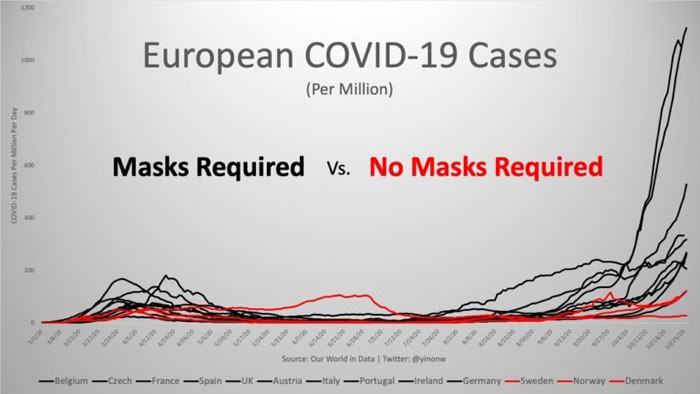
Another way to shed light on whether masks work or not is to compare infection rates (read: positive test rates) before and after the implementation of universal mask mandates. In his article,32 "These 12 Graphs Show Mask Mandates Do Nothing to Stop COVID," Yinon Weiss does just that.
He points out that "No matter how strictly mask laws are enforced nor the level of mask compliance the population follows, cases all fall and rise around the same time." To see all of the graphs, check out Weiss' article33 or Twitter thread.34 Here are just a select few to bring home the point:
Let's Embrace Reality
Mask wearing, which clearly does little in terms of preventing the rate and risk of infectious spread of SARS-CoV-2, delays the inevitable, which is the acceptance that the disease known as COVID-19 is part of our future, just like the pandemic swine flu H1N1, all the influenza viruses that shift with each season, tuberculosis, Zika and a whole host of other viruses.
We simply cannot prevent any and all COVID-19 deaths any more than we can prevent death from any other cause. All we can do is understand what makes us vulnerable, and take steps to address those underlying weaknesses. In the case of COVID-19, that includes addressing metabolic health, insulin resistance, obesity, and nutritional deficiencies such as vitamin D, magnesium and zinc.
By doing that, you make yourself more resistant to infection and complications thereof. For nine months, the focus has been on masking, social distancing, shutting down businesses and getting a vaccine. Time and again, the goal post has shifted, such that now we're told that even with a vaccine, all of the other measures will still be required well into 2022.
We need to start presenting a united front against those who seek to destroy society as we know it and steal our assets and resources. One of the first steps toward that end is taking a firm stand against nonsensical and scientifically unjustifiable rules such as universal mask wearing, be it on planes, in stores or outdoors.
While it may not always be possible, consider not frequenting or buying from businesses that kick people out for not wearing a mask. Remember that collectively we have financial clout and, typically, hitting businesses in the pocketbook is the most effective way to demand change.
Sulfur is in the top three abundant minerals found in the human body1 and the topic of the interview with Stephanie Seneff, senior research scientist at the Massachusetts Institute of Technology, in the video above. An epidemiological study from West Virginia University found glucosamine sulfate supplements may lower overall mortality as much as regular exercise.2 The underlying mechanism may be related to sulfur.
If you've ever smelled sulfur gas when it comes up from well water, you won't forget the smell of rotten eggs. In fact, the natural gas industry adds mercaptan, a component of sulfur, to natural gas — which has no odor — to make it smell like rotten eggs so you can detect a natural gas leak.3
While stinky in gas form, sulfur is an important mineral in the optimal function of your body. Interestingly, you'll get most of your sulfur from specific amino acids, including methionine, cysteine, cystine, homocysteine, homocysteine and taurine.4 Of these, the two most important are methionine and cysteine. Methionine is an essential amino acid, which means your body can’t synthesize it so it must be supplied through your diet.
Your body can make cysteine from methionine but not from inorganic forms of sulfur. Some individuals are allergic to sulfa drugs and may have concerns about eating sulfur-containing foods. However, since sulfur is an essential element to life, no one is allergic to sulfur. When a sulfonamide molecule from sulfa drugs is metabolized it can bind to a protein that serves as an allergen.5
The sulfonamide molecule in sulfa drugs does have sulfur, but it is embedded in a compound with the unique property of being able to form proteins that cause an allergic reaction in some people. Glucosamine, the subject of the featured publication, is an amino acid that is often combined with sulfate and not known to trigger allergic reactions from the sulfate.6
However, most glucosamine supplements are derived from shellfish and there is some concern of an allergic reaction in people who have an allergy to shellfish.7 There are several forms of glucosamine supplements that are not interchangeable.
They include glucosamine sulfate, glucosamine hydrochloride and n-acetyl glucosamine. Glucosamine sulfate is what is used to help painful arthritis and was the focus of this study.
In an epidemiological study released from West Virginia University, researchers found that individuals using glucosamine supplements had reduced overall mortality to the degree conferred by regular exercise.8 The first author, Dana King, is chair of the department of family medicine at West Virginia University.9
He and his partner, a data analyst, evaluated information from 16,686 adults who had participated in the National Health and Nutrition Examination Survey. The results were from 1999 to 2010 and the data was merged with 2015 mortality figures.
The researchers controlled for a variety of confounding factors, such as age, activity level and smoking status, and found those taking a glucosamine/chondroitin supplement each day for at least a year or longer had a 39% reduced potential of all-cause mortality and a 65% reduction in mortality from cardiovascular-related events.10
King shared that his interest in glucosamine and chondroitin began when he learned many of the cyclists he rode with on weekends used the supplement. King points out that the data are from an epidemiological study and not a clinical trial so it can’t conclusively demonstrate that death is less likely, but goes on to comment:11
“Does this mean that if you get off work at five o’clock one day, you should just skip the gym, take a glucosamine pill and go home instead? That’s not what we suggest. Keep exercising, but the thought that taking a pill would also be beneficial is intriguing.
Once we took everything into account, the impact was pretty significant. In my view, it’s important that people know about this, so they can discuss the findings with their doctor and make an informed choice. Glucosamine is over the counter, so it is readily available.”
The results of this study support previous research published in the BMJ in which researchers engaged 466,039 participants without cardiovascular disease to determine if there was an association between glucosamine use and a reduction in the risk of cardiovascular disease.12
After adjusting for confounding factors, such as age, body mass index, dietary intake, sex and drug use, researchers found there was a “significantly lower risk” of 9% to 22% of all outcome measures.
The outcome measures included cardiovascular disease events, coronary heart disease and stroke in people who used glucosamine supplements daily. The researchers found that their findings supported past studies that had demonstrated an inverse relationship between glucosamine supplementation and cardiovascular disease risk and mortality.
Interestingly, they also found those taking glucosamine and who were current smokers experienced reductions in cardiovascular disease greater than in those who were past smokers or never smokers. They theorized this was because smokers have a higher level of inflammation and glucosamine is associated with a reduction in C-reactive protein, a marker for systemic inflammation.
Sulfur Deficiency May Contribute to Multiple Conditions
An opinion piece that ran in the same publication points out that the sulfate in glucosamine sulfate supplements, which make up “most glucosamine products available on the market,”13 may have been a contributing factor as it satisfies a potential sulfur deficiency.14
One study analyzing how much sulfur is available in the diet concluded “a significant portion of the population that included disproportionately the aged, may not be receiving sufficient sulfur.”15 Scientists are aware that nutrient deficiencies can produce significant health problems.
In one paper in the Journal of the American Heart Association the writers said: “Micronutrients are necessary cofactors for normal cardiac metabolism, and deficiencies have been implicated in the development and progression of HF [heart failure].”16
Seneff and her team proposed the hypothesis that atherosclerosis is the result of a cholesterol sulfate deficiency.17 They proposed that atherosclerosis can be explained by the body using plaque to replenish cholesterol and sulfate to the microvasculature. They argue that insufficient sulfate may increase the risk of high blood pressure and blood clot formation.
Seneff calls sulfur an “unappreciated deficiency” since it is found in several foods and most assume that your diet meets your minimum daily requirements.18 Excellent food sources include eggs, garlic, onions and green leafy vegetables. Nuts, grass fed meat and seafood also contain sulfur.
However, a depletion in the soil creates a deficiency in your fruits and vegetables and may contribute, in part, to sulfur deficiency. She theorizes that a sulfur deficiency is related to rising obesity rates and is connected to glucose metabolism and cardiovascular disease.
In her research, she found people who experience muscle wasting from diseases such as cancer, HIV, sepsis, irritable bowel disease and athletic overtraining may be the result of a deficiency in cysteine and glutathione, two amino acids with sulfur molecules.
MSM Is a Powerful Sulfur Supplement
Sulfur can be found in your muscles, skin and bones. It helps with fat digestion, is needed to make bile acid and required to form collagen.19 The element plays important roles in hundreds of physiological processes. For example, sulfur bonds are needed for proteins to maintain their shape and they determine the biological activity of the protein.
Hair and nails are made of a tough protein called keratin, which is high in sulfur, whereas connective tissue and cartilage have protein with flexible sulfur bonds.20 In addition to proteins, sulfur is also required for the proper structure and biological activity of enzymes.
Methylsulfonylmethane (MSM) is a sulfur donor and contains 34% elemental sulfur by weight.21 Many of the benefits of supplementing with MSM are related to the compound's ability to reduce inflammation, regulate the balance of reactive oxygen species and antioxidant enzymes,22 and modulate your immune response.23 It is widely used in the treatment of pain, especially pain associated with arthritis.
In one clinical trial, researchers found people with osteoarthritis of the knee who took three grams of MSM twice a day for 12 weeks experienced a significant reduction in pain and improvement in physical function, as compared to those who took the placebo.24
In another randomized double-blind placebo-controlled study,25 data showed participants with mild-to-moderate osteoarthritis experienced an analgesic and anti-inflammatory effect when given oral glucosamine and MSM, both individually and in combination.
In this study, the treatment groups received 500 milligrams (mg) of glucosamine and/or 500 mg of MSM three times a day for 12 weeks. According to the authors:
“Combination therapy showed better efficacy in reducing pain and swelling and in improving the functional ability of joints than the individual agents.
All the treatments were well tolerated. The onset of analgesic and anti-inflammatory activity was found to be more rapid with the combination than with glucosamine. It can be concluded that the combination of MSM with glucosamine provides better and more rapid improvement in patients with osteoarthritis."
The Benefits of Bone Broth and Epsom Salts
In addition to food and MSM supplementation, you may also absorb sulfur from homemade bone broth or a relaxing soak in a warm Epsom salt bath. As I've written in the past, bone broth contains other valuable minerals that your body can easily absorb in use, including magnesium, phosphorus, calcium, silicon, sulfur chondroitin and glucosamine.26
Bone broth also helps attract and hold liquids in the digestive system and supports proper digestion. In one study, researchers found that chicken soup has medicinal qualities and significantly mitigated inflammation and infection.27,28 The amino acids in bone broth helps to fight inflammation and courtesy of chondroitin sulfate and glucosamine, it helps to reduce joint pain and inflammation.29
Bone broth is made from animal bones. It's important to use homemade bone broth since the store-bought variety is produced by adding chemical-laden bouillon cubes, whereas traditional soups are made by cooking bones and meat for several hours. In its simplest form, it's made by using bones, vinegar and spices, and simmering in a pot or slow cooker for as long as 24 to 72 hours.
Bone broth made over longer periods of time increases the release of gelatin, minerals and other nutrients from the bones, which are key to many of the benefits and restorative properties.
Epsom salt baths are a simple way of absorbing both magnesium and sulfate. Epsom salt is magnesium sulfate, which is easily absorbed through your skin. It is also a preferable way of absorbing magnesium and sulfate since it's readily available to your body without having to be converted as it is when taken orally.
As a general recommendation, use 1 to 2 cups of Epsom salt in a tub of water. The warmer the water, the more the salt will dissolve and the more your body will be able to absorb it.
Some people may experience a negative reaction, such as irritability or hyperactivity. In this case, decrease the amount you use and incrementally raise it based on your tolerance. Alternatively, make a foot bath of one part Epsom salt to two parts water and soak your feet for about 30 minutes.
A new reference genome assembly identified more than 85 million genetic variants in the rhesus macaque, the largest database of genetic variation for any one nonhuman primate species to date.
from Top Health News -- ScienceDaily https://ift.tt/2JtIi92
This article is part of a weekly series in which Dr. Mercola interviews various experts on a variety of health issues. To see more expert interviews, click here.
In this interview, Tucker Goodrich and I discuss what will be the topic of my next book, namely linoleic acid (LA), which I believe is likely the leading contributing cause of virtually all chronic diseases we’ve encountered over the last century. Unfortunately, this is a topic that most clinicians and health care practitioners who focus on natural medicine have only a superficial understanding of.
Goodrich has a business background as a stockbroker and asset manager, and developed an IT risk management system used by two of the largest hedge funds in the world. A string of health crises in his late 30s and early 40s prompted him to apply his research and troubleshooting skills to medical research.
As noted by Goodrich, “It was a very upsetting time in my life and medical professionals really weren't any help at all in trying to figure out what caused things.” After a lot of reading and researching, he decided to cut out seed oils from his diet, and in just two days, his 16-year-long bout with irritable bowel disease started to dramatically improve.
“I started immediately feeling better,” he says. He also lost a significant amount of weight over the next two months. After that, he stopped eating carbs and realized he must have had a severe case of gluten intolerance.
“Being an engineer by trade, I did a lot of experimenting. What can I eat? What brings back the symptoms? What do I have to avoid to keep the symptoms away? And it was a transformation that made everybody I worked with comment on what a difference they saw in me. It was a very quick change,” he says.
Avoiding Omega-6 Fats Is Key for Good Health
While considered an essential fat, when consumed in excessive amounts, which over 99% of people do, LA (an omega-6 polyunsaturated fat or PUFA) acts as a metabolic poison.
Most clinicians who value nutritional interventions to optimize health understand that vegetable oils, which are loaded with omega-6 PUFAs, are something to be avoided. What most fail to appreciate is that even if you eliminate the vegetable oils and avoid them like the plague, you may still be missing the mark.
Chances are you’re still getting too much of this dangerous fat from supposedly healthy food sources such as olive oil and chicken (which are fed LA-rich grains) — a topic covered in “Why Chicken Is Killing You and Saturated Fat Is Your Friend.”
Another common mistake is to simply increase the amount of omega-3 that you eat. Many are now aware that the omega-3 to omega-6 ratio is very important, and should be about equal, but simply increasing omega-3 can be a dangerous strategy. You really need to minimize the omega-6. As explained by Goodrich:
“The ratio is not really what's important. What's important is avoiding the omega-6 fats. There are disease models, like age-related macular degeneration (AMD), where that's starting to be clearly understood, and you can find papers saying explicitly that the important intervention that prevents AMD from progressing is reduction of omega-6 fats, and you can't prevent it by increasing your omega-3 fats.
I've got papers that show, in animal models, very nasty outcomes, such as liver failure, with a lower omega-6 to omega-3 ratio, but high absolute levels of both fats still allows pathology to progress.”
LA Is a Primary Contributor to Chronic Disease
When we talk about omega-6, we’re really referring to LA. They’re largely synonymous, as LA makes up the bulk — about 60% to 80% — of omega-6 and is the primary contributor to disease. Broadly speaking, there are three types of fats:
Saturated fats, which have a full complement of hydrogen atoms
Monounsaturated fats, which are missing a single hydrogen atom
PUFAs, which are missing multiple hydrogen atoms
The missing hydrogen atoms make PUFAs highly susceptible to oxidation, which means the fat breaks down into harmful metabolites. OXLAMS (oxidized LA metabolites) are what have a profoundly negative impact on human health. While excess sugar is certainly bad for your health and should be limited to 25 grams per day or less, it doesn’t oxidize like LA does so it’s nowhere near as damaging.
Over the last century, thanks to fatally flawed research suggesting saturated animal fat caused heart disease, the LA in the human diet has dramatically increased, from about 2 to 3 grams a day 150 years ago, to 30 or 40 grams a day. Goodrich cites research showing LA used to make up 1% to 3% of the energy in the human diet and now it makes up 15% to 20%.
In my mind, this radical change has had the most catastrophic impact on human health in the history of the human race, as it is the complete opposite of what you need for optimal health. This dietary change has undoubtedly killed millions, probably hundreds of millions, prematurely and still continues to do so because people don't understand this.
“I'm a speed reader and I love reading medical journals … but what nobody's really done is connect all the dots. There are a lot of people who understand little sections of [the science], but they haven't gone on to coalesce everything into a common explanation for these pathologies across different disease states.
I think that's what I've been able to do, and I think that's the key insight that makes this message really compelling,” Goodrich says.
On a side note, do not confuse LA with conjugated linoleic acid (CLA). While most think CLA and LA are interchangeable, they’re not. CLA has many potent health benefits and will not cause the problems that LA does.
How Excess LA Consumption Damages Your Health
At a molecular level, excess LA consumption damages your metabolism and impedes your body’s ability to generate energy in your mitochondria. There is a particular fat only located in your mitochondria — most of it is found in the inner mitochondrial membrane — called cardiolipin.
Cardiolipin is made up of four fatty acids, unlike triglycerides which have three, but the individual fats can vary. Examples include LA, palmitic acid and the fatty acids found in fish oil, DHA and EPA. Each of these have a different effect on mitochondrial function, and depending on the organ, the mitochondria work better with particular kinds of fatty acids.
For example, your heart preferentially builds cardiolipin with LA, while your brain dislikes LA and preferentially builds cardiolipin in the mitochondria with fats like DHA. Goodrich further explains:
“To give you an idea of how important this is, 20% of the fat in your entire body is contained in cardiolipin. So, for anybody who doesn't understand mitochondria, mitochondria are what distinguish us from bacteria. It's what allows us to be a multi-cellular creature. They are what produce the energy in your body, what's known as ATP, which is a chemical carrier of energy.
To give you an example of how important it is, cyanide, which we all know is highly toxic, breaks your mitochondria, and that's why it kills you so fast. It prevents mitochondrial respiration and therefore your entire body shuts down almost instantly.
So, [mitochondria are] something we want to take good care of because they're everywhere, in almost every tissue except for red blood cells … There are studies showing that cardiolipin is directly controlled by dietary intake of fats. That is, to an extent, true. Obviously, different tissues build cardiolipin in the mitochondria out of different fats.
But they can vary that composition in fairly short order through changing the diet in rat models, like in the order of weeks. So, you can see changes pretty quickly. I notice things happening in days. What's unique about LA is that it is very susceptible to oxidation when it is in the cardiolipin molecule.
Two LAs that are adjacent to each other can oxidize each other. They're also attached to proteins in the mitochondria that contain iron, and that iron can catalyze the oxidation of cardiolipin. This is a pretty fundamental process in the body.”
Oxidation of Cardiolipin Controls Autophagy
Oxidation of cardiolipin is one of the things that controls autophagy. In other words, it’s one of the signals that your body uses when there’s something wrong with a cell, triggering the destruction and rebuilding of that cell. Your cells know that they’re broken when they have too many damaged mitochondria, and the process that controls this is largely the oxidation of omega-6 fats contained within cardiolipin.
So, by altering the composition of cardiolipin in your mitochondria to one that's richer in omega-6 fats, you make it far more susceptible to oxidative damage. Goodrich cites research showing that when the LA in cardiolipin is replaced with oleic acid, another fat found in olive oil, the cardiolipin molecules become highly resistant to oxidative damage.
“That is basically what I think we need to go back to,” he says. “We evolved with low levels of LA in our diet and therefore in our cardiolipin. One of the neatest papers I've ever seen looking at this, something that encapsulated this whole model that I'm talking about, fed rats either a regular high carbohydrate diet, or they added PUFAs to their diet.
Just adding the omega-6 fats to the diet caused the mice to become diabetic. They became insulin resistant, leptin resistant, obese, and the differences are pretty stark between the fat mice and the skinny mice on the high carbohydrate rat diet …
The high-PUFA diet caused a breakdown in the cardiolipin content in the mitochondria in their hearts. So just adding seed oils caused heart damage through a change in the cardiolipin composition.”
As mentioned, the primary problem is the OXLAMS, the oxidized byproducts. One of them is 4HNE, which is relatively easy to measure. Studies have shown there’s a definite correlation between elevated levels of 4HNE and heart failure. LA is broken down into 4HNE even faster when the oil is heated, which is why cardiologists recommend avoiding fried foods.
OXLAMS Trigger Cancer
Heart disease isn’t the only condition triggered by excessive LA intake and the subsequent OXLAMS produced. It also plays a significant role in cancer. As noted by Goodrich, to induce cancer in animal models, you actually have to feed them seed oils. “So, this is a really fundamental process that we're talking about here,” he says.
Animals typically develop cancer once the LA in their diet reaches 4% to 10% of their energy intake, depending on the cancer. In the breast cancer model, cancer incidents increase once 4% of calories are in the form of seed oils. Disturbingly, most Americans get approximately 8% of their calories from seed oils. “So, we're way over what these thresholds in the lab would suggest is a safe level of these fats based on the laboratory work in animals,” Goodrich says, adding:
“We've got this huge disconnect between what the lab science tells us we should be doing and what our dietary guidelines tell us we should be doing. The scientists are saying, ‘Oh, look, it's poison. It causes all the chronic diseases,’ and the government's saying, ‘Eat lots of it.’ That's not a good thing.”
4HNE is a mutagen, in other words, a toxin that causes DNA damage. One of the primary genes it damages is the P53 anticancer gene. Mutations in the P53 gene is found in 15% of cancers, making it one of the most common. As noted by Goodrich, “P53 is literally a cancer prevention gene. It's how your body regulates cancer. You can all draw your own conclusions about the wisdom of eating something that can cause that to break.”
On a side note, one of the major jobs of glutathione is to detoxify 4HNE. You can often tell that you have excess 4HNE if your glutathione levels are low, as this means it’s being used up detoxifying 4HNE.
LA and Obesity
High-LA diets also cause obesity. “If you feed mice lots of saturated fat, they don't get fat and they don't get sick. It's only when you increase the LA in the diet from 1% to 8% that they become obese,” Goodrich says. Now, mice and rats are not exactly like humans, so how do we know all of this applies to us? Goodrich explains:
“What Alheim and Ramston observed is that, back in 2006, there was a drug introduced called Rimonabant, which was an anti-obesity drug. It was a bit of a miracle drug. I want to quote this exactly because it's so important to understand the effects that this drug had on humans.
‘Large randomized trials with Rimonabant have demonstrated efficacy in treatment of overweight and obese individuals with weight loss significantly greater than a reduced calorie diet alone.
In addition, multiple other cardiometabolic parameters were improved in the treatment groups, including increased levels of HDL, reduced triglycerides, reduced weight circumference, improved insulin sensitivity, decreased insulin levels. And in diabetic patients, improvements in HBA1C.’
This paper was released in 2007. Unfortunately, Rimonabant had a side effect that it caused people to want to kill themselves. So, it was withdrawn from the market and it largely killed research for several years into that area.
But what Alheim did in 2012 was demonstrate that the mechanism behind Rimonabant is to block the metabolism of seed oils into the chemicals in your body and the endocannabinoid system that cause overeating. My experience when I stopped eating seed oils was that I forgot to eat carbohydrates.
The effect of Rimonabant in these mouse models is to make them crave carbohydrates and to stimulate them to eat sweet foods and carbohydrates. Everybody's familiar with this effect. It's called the munchies. And it's what you get after you smoke pot, because the endocannabinoid system is the system that marijuana affects and the chemical that Rimonabant blocks is your body's homologue to the THC in marijuana.
So essentially what we've done to ourselves is given ourselves a chronic case of the munchies, which is blocked by this unfortunately very harmful drug. This is as open and closed a case for causation as you're going to find in the medical literature.
We have a human drug that treats this, and as I just read, it treats all these different aspects of this disease. And it works through this one pathway that we have a clear demonstration of in animal models. In this case, the drug is completely pointless because the dietary fix is well known and is simple.”
Increased LA Also Increases Your Risk of Sunburn
So, to summarize, the dramatic increase in LA — and the oxidative end products that cause the damage — is the primary cause behind the increase in chronic diseases such as obesity, diabetes, heart disease and cancer.
Simply lowering your LA intake to what your great-great grandparents used to eat, you can essentially eliminate almost every single one of the diseases that is now prematurely killing us.
Interestingly enough, there’s even evidence showing eliminating seed oils from your diet will dramatically reduce your risk of sunburn, which is something Goodrich experienced first-hand. “Susceptibility to UV radiation damage is controlled by how much PUFAs are in your diet,” he says. “It's like a dial. They can control how fast it happens, and how fast you get skin cancer.”
Seed Oils Raise Risk of ARDS and COVID-19
Considering the metabolic and mitochondrial damage caused by LA, there’s reason to suspect LA may also play a role in COVID-19, as some white blood cells convert LA into leukotoxin. Essentially, LA contributes to the inflammatory domino effect that eventually kills. Goodrich explains:
“Yes. That's certainly what the conclusion that I drew. I did an enormous post on this, looking at the effects of LA in SARS COV-2 and SARS in general. SARS is a severe acute respiratory syndrome. SARS kills you by giving you acute respiratory distress syndrome (ARDS).
ARDS can be caused by lots of different things, not just these viruses. You can get it from influenza. You can get it from inhaling acid into your lungs. What's fascinating is the human literature is quite clear that you can induce ARDS through feeding seed oils.
Very sick people who can't eat are fed intravenously. It's called total parenteral nutrition (TPN). Generally, this is used through a product called Intralipid, which is made out of soybean oil and sugar. When you start to understand all this stuff, it's just mind boggling. Doctors did an experiment after they noticed that a lot of their patients who came into the ICU and got TPN then subsequently got ARDS.
So, they started playing with what they were feeding them, and what they discovered was this soybean oil formula increased the patient's rate of getting ARDS. The fatality rate from ARDS is 30% to 60%. Feeding seed oils increased the rate of ARDS by seven times.”
As explained by Goodrich, the key toxin that produce the symptoms of ARDS is called leukotoxin, and leukotoxin is made from LA by white blood cells to kill pathogens. It’s toxic enough to where if you inject high-enough amounts of it into animals, it kills them in minutes. Leukocytes incubated with LA convert all of the LA into this toxin until there's none left, so, a major part of the disease process in ARDS is the conversion of LA into leukotoxin. That is what ends up killing patients.
“It is often noted in the popular press that what kills people is this cytokine storm. What I'm describing is the mechanism of the cytokine storm. Leukotoxin is uniquely what causes the symptoms of ARDS, as has been clearly demonstrated in the animal models,” Goodrich says. “So, it seems to me that a sensible thing to do would be [to] change your diet. Why wouldn't you want to do that?”
How LA Triggers Heart Disease
Goodrich also explains how high LA levels causes heart disease. One of the first things that happens in atherosclerosis is your macrophages, another type of leukocyte, turns into a foam cell, essentially a macrophage stuffed with fat and cholesterol. Atherosclerotic plaque is basically dead macrophages and other types of cells loaded with cholesterol and fat. This is why heart disease is blamed on dietary cholesterol and fat.
However, researchers have found that in order for foam cells to form, the LDL must be modified through oxidation, and seed oils do just this. Seed oils cause the LDL to oxidize, thereby forming foam cells. LDL in and of itself does not initiate atherosclerosis. LDL's susceptibility to this oxidative process is controlled by the LA content of your diet.
“That's a result that's been repeated several times, so subsequently, the definition of an atherogenic lipid in your blood is one that contains oxidized omega-6 fats. That's the definition,” Goodrich says.
"The standard explanation of why you get heart disease and why it progresses the way it does is because the omega-6 fats in your blood get oxidized and become toxic, and progress you all the way through atherosclerosis until it finally kills you.
That's the standard explanation for what causes heart disease. I can't tell you how many cardiologists I have talked to who don't understand that that's what the medical literature says is causing this disease.
Now, it's worse if you're also on a high carbohydrate diet. A ketogenic diet is somewhat protective against the negative effects of this, but I can't stress enough that this is the standard explanation for cardiovascular disease in the medical literature — that seed oils oxidize and that's what causes the pathology.”
Understanding Olive Oil
As mentioned, olive oil also contains LA, but it also has other healthy fats. This makes olive oil a bit tricky. The main fat in olive oil is oleic acid, which is one of your body's favorite fats. Your body actually makes, it, which is why it's not considered an essential fat. Oleic acid is much more resistant to oxidation than LA, which is why olive oil is a pretty decent cooking oil.
According to Goodrich, oleic acid is protective against both cardiolipin oxidation and LDL oxidation. Interestingly, oleic acid can also replace LA in LDL. Other fats, such as palmitic acid, cannot do that. The problem with olive oil is that it also has a fair amount of LA.
“The percentages that I've seen quoted in literature range from 2%, which is awesome, to 22%, which is not good,” Goodrich says. The other problem is the olive oil market is hugely corrupt and fraught with fraud. Many olive oils are cut with cheaper seed oils, which raises the LA content.
So, in summary, if you’re using olive oil, I strongly recommend keeping close track of your total LA intake. Anything over 10 grams a day is likely to be problematic (although the exact cutoff is still unknown, so this is merely an educated guess).
If you really want to be on the safe side, consider cutting LA down to 2 or 3 grams per day, to match what our ancestors used to get before all of these chronic health conditions became widespread. If olive oil puts you over the limit, consider cooking with tallow or lard instead. Beef tallow is 46% oleic acid and lard is 36% oleic acid.
High-LA Sources to Avoid
As Goodrich suggests, if you want to protect your health, you’d be wise to avoid all concentrated sources of LA. Top sources include chips fried in vegetable oil, commercial salad dressings, virtually all processed foods and any fried fast food, such as french fries.
“What amazes me is people who go to all these measures and I'll hold up my girlfriend as an example. She was a vegan when we got together, had a farm and grew organic food and went to extremes to avoid toxins in food and then went home and cooked with seed oils,” Goodrich says.
"There are so many people who are like this, who are genuinely trying to do their best to have a healthy diet and then they're chugging down LA that turns into a metabolic toxin in your body, and they wonder why they can't lose weight.
By the way, after I told her, what I just said here: Avoid seed oils, avoid refined carbohydrates, eat animal food and animal fats, she lost 56 pounds in two and a half months and her autoimmune disease, fibromyalgia, went into complete remission.”
The Importance of Carnosine
Beef, even conventional grain-finished beef, has low LA. Grass fed beef has higher DHA and CLA, which makes it a healthier option. Beef is also the primary source of carnosine, which has been shown to be anti-atherogenic.
Carnosine is also a mitochondrial stimulant, a sacrificial scavenger of advanced lipooxidation end products (ALEs), which is very similar to advanced glycation end products (AGEs). AGEs is another name for HNE and all the other reactive oxygen species generated from oxidizing LA.
Carnosine is the most effective scavenger for HNE. Carbonylation of proteins is basically the process through which proteins in your body get damaged and become ineffective. HNE damages 24% of the proteins in your cells, so carnosine can go a long way toward warding off this cellular damage. As explained by Goodrich:
“In heart failure, Alzheimer's and in AMD, one of the things they see is an inability of the cell to produce enough energy. The mitochondria are getting damaged. HNE does that damage. It damages 24% of the proteins in the cell, primarily around energy production.
One of the worst cancers is glioblastoma, a brain cancer. A researcher up in Boston, [Thomas Seyfried], decided to try and figure out why the mitochondria are getting damaged in glioblastoma, and found they all have oxidized cardiolipin. Every single cancer cell he looked at had damaged cardiolipin in it.
One of the ways your cells produce energy is they basically ferment glucose into pyruvate outside of the mitochondria This is a perfectly normal part of metabolism and they produce something called pyruvate. A molecule called pyruvate dehydrogenase takes pyruvate into the mitochondria and converts it to acetyl-CoA so the mitochondria can burn it very efficiently for fuel.
Well, one of the things HNE does is it breaks pyruvate dehydrogenase, and they see this in Alzheimer's where their cells are no longer able to produce enough energy. This is why your cells are dying in Alzheimer's. The beta amyloid plaques in Alzheimer's disease are induced by HNE. There's a great model that came out of Harvard a couple of years ago showing that.
And in cancer, if you can't get pyruvate out of the cell, out of the cytosol, the part of the cell surrounding the mitochondria, it has to ferment there and turn it into energy, which is what we call the Warburg effect, where you start shifting over to this damaged primitive fuel system. The evidence seems to be that that's because you've broken your mitochondria.
Even the critical, the most important part of the mitochondria, complex 5ADP synthase — which is what takes all the energy coming from your mitochondria and turns it into ATP, which is what fuels the rest of your body — is damaged by HNE. This is a huge issue. There's no more fundamental problem in aging and health than protein damage.”
Take Control of Your Health by Lowering Your LA Intake
As you can see, the evidence strongly suggests excessive LA is driving all the killer diseases today. The solution is simple though. Just lower your LA intake. There’s an easy way to do this. You don't have to send all your food out for analysis. Simply use an online nutritional calculator such as Chronometer to calculate your daily intake.
Chronometer will tell you how much omega-6 you’re getting from your food down to the 10th of a gram, and you can assume 90% of that is LA. Again, anything over 10 grams is likely to cause problems. Since there’s no downside to limiting your LA, you’ll want to keep it as low as possible, which you do by avoiding high-LA foods.
Keep in mind you’ll never be able to get to zero, and you wouldn’t want to do that either. So, just what should you eat to keep your LA intake low? Goodrich summarizes his own diet:
“I eat mostly beef. I eat vegetables. I cook mostly in butter. I eat a little bit of fruit. I eat occasional grains. Occasionally I'll have corn, a little bit of rice and potatoes. I'm mostly on a cyclical keto diet. Once you fix your metabolic system, then you can go back and forth a lot easier and I don't see any reason to be on strict keto long term. I think [cyclical keto] is healthier.
They looked at a ketogenic diet in rodents and found they were protected. The reason they were protected is because they were able to burn HNE as fuel. But if you add a little bit more insulin into the system, then it turns off fat-burning and HNE goes out of the mitochondria and does more damage.”
This is yet another reason for working out in a fasted state, which Goodrich also recommends. “I think working on a fasted state is one of the most important health things that you can do, without question,” he says. Goodrich also points out that the reason a strict ketogenic diet can cause liver failure is due to the omega-6 fats in the diet. It’s crucial to make sure the fats you eat are actually healthy.
Goodrich is currently in the process of writing a book about this, as am I, in which all of this information will be laid out in even greater detail. In the meantime, you can learn more by visiting Goodrich’s blog, Yelling-Stop, or follow him on Twitter. In closing:
“I can't say anything that you haven't already said in this talk, honestly,” Goodrich says. “You want to eat like your ancestors ate because your ancestors were healthier and they were not eating industrial seed oils. They were not eating industrial processed carbs in high quantities.
They were making sure that they got lots of animal meat and animal fat and they were getting exercise. I mean, it doesn't really matter what kind of exercise you're doing, just as long as you're doing it.
I think I have helped many people in many different ways by telling people this. And it's typically a short conversation, like my girlfriend who cured her autoimmune disease, fibromyalgia. She'd been in constant pain for almost 30 years and it went away in a couple of weeks. I mean, that's amazing, and it's so simple to do.
This is, I believe, the fundamental problem with our modern health — this issue of LA. There are lots of other things that play into it. There's no doubt about that, but that's the fundamental thing. If you fix that, you can get away with doing a lot of other things that aren't exactly optimal, but still be healthy.”
For his most recent book, Taubes interviewed more than 120 physicians, plus a few dieticians and chiropractors and a dentist — about 140 medical practitioners in all — to understand the challenges that clinicians and patients face when trying to implement a ketogenic diet and lose weight.
The first half of the book explains how carbs and fats affect your body, and why replacing carbs with healthy fats is so important if you’re trying to control your weight and/or blood sugar. The second half of the book is a review of the lessons he’s learned along the way.
The Real Cause of Obesity
As noted by Taubes, on a global scale, the obesity epidemic can be linked back to a Western diet rich in refined sugars and grains. Whenever sugar and white flour are added to a population’s diet, regardless of what their baseline disease rate is, you eventually end up with an epidemic of obesity and diabetes.
The idea that you get fat because your caloric intake exceeds your expenditure naïve, Taubes says. “That's not the cause of obesity. That's like saying we get rich because we make more money than we spend.” He also takes issue with the idea that obesity is a hormonal regulatory disorder.
“There are a lot of hormones that play a role in fat accumulation. Sex hormones primarily. But the hormones that link our diets to obesity is our insulin and glucagon,” he says. “I pretty much left glucagon out of the story because I don't think we need to discuss it to know what the dietary treatment is.
So, when you're talking about the influence of diet on obesity, it's not because we eat too much, it's not because we eat too much energy dense food. It’s [about] the glycemic index of the carbohydrates. How quickly can we digest the carbohydrates in our diet? And then the fructose content, the sugar content.”
Unfortunately, Taubes estimates some 98% of conventional nutrition and obesity research community still approach obesity as an energy balance disorder. “They've been trained over their entire professional careers to think of obesity as caused by this imbalance in intake and expenditure,” he says.
“They believe it's a direct consequence of the laws of thermodynamics. When they do research on this, they’re often not studying why people accumulate excess fat. They're studying appetite and satiety and eating behavior, because they think that the reason why they accumulate fat can be explained if you can explain why they eat so much.”
On the upside, many physicians are now starting to understand the role of diet, processed grains and sugar in particular. Interestingly, the U.S. Department of Agriculture Dietary Guidelines Advisory Committee’s 2020 report claims there’s an insufficient amount of low-carb and ketogenic diet trials to suggest that this kind of diet would be beneficial for the American public at large.
This despite the fact that hundreds of studies over the past two decades have consistently shown a ketogenic diet to be beneficial. “Name a disease state at the moment from Alzheimer's to traumatic brain injury, and you'll find somebody studying whether or not ketogenic or a low-carb/high-fat diet could be beneficial,” Taubes says.
In 2018, the American Diabetes Association Nutrition Committee published a consensus report1 saying there was more consistent evidence for a low-carb or very low-carb diet being beneficial for Type 2 diabetes than any other diet tested, particularly ones that have been advocated by mainstream medical authorities, such as the Mediterranean diet and the DASH diet.
“So, clearly, the studies are out there,” Taubes says. “I think what we're faced with is a sort of classic combination of cognitive dissonance and groupthink. When you spend your whole life believing something to be true and proselytizing about the truth of that supposed fact, it's very hard to think otherwise, no matter what the research shows.
The literature of cognitive behavioral psychology is full of studies and texts discussing this phenomenon. Cognitive dissonance … is what happens when a brain is confronted with evidence that something that brain has believed indisputably is wrong.”
Not All Fats Are Equal Metabolically
An important side note here is that while processed sugars and grains are certainly a significant contributor to obesity and ill health, the types of fats you eat play an important role. Many are eating far too much omega-6 linoleic acid (LA), which appears to be even worse than excess sugar.
In fact, I now believe an excess of LA in general is responsible for a vast majority of the damage and ill health we see in response to diet. I’ve reviewed this in several recent articles, including “How Linoleic Acid Wrecks Your Health.”
Now, while most people will experience a significant improvement in their health when they cut down on processed carbs, replacing them with fats, the improvement is not universal. This paradox, I believe, is because they’re eating too much LA.
Similarly, I think those who successfully use high-carb, low-fat diets to treat obesity, diabetes and coronary artery disease may be achieving these beneficial effects largely because they’re avoiding excess LA. Taubes is not entirely convinced, however, and goes into some of the details of his objections in the interview.
"Here's what we need: We need to know how the LA changes in other populations, not just ours. Can we find populations that ate relatively large quantities of it but did not have obesity and diabetes and heart disease epidemics? Because if we do, that's a bad sign. Do we have clinical trials? We have a whole host of clinical trials poorly done, uncontrolled, but can we look at those and see what the levels are?” Taubes says.
The Importance of Self-Experimentation
As noted in Taubes’ book, at some point, you’ll need to be willing to self-experiment to determine your own dietary triggers and what works best for you. At the end of the day, it’s about how you feel, not how well you follow any given diet. Taubes recommends starting off rigidly abstaining from carbohydrate-rich foods, and then assessing what other problems you might have and make additional changes from there.
“At the end of the book I talk about the lessons I learned from these 120 plus physicians I interviewed,” Taubes says. “I have one section in which the opening quote is from a wonderful spine surgeon in Ohio, who's a vegan. She cannot tolerate animal products.
She has a family history of obesity. She used to be obese … she's now a Type 1 diabetic, yet she sustains her health on a vegan ketogenic diet. And she says ‘It's not a religion, it's about how I feel.’ What she learned over the years is that her body couldn't tolerate animal products.
Whether it's the fat content, or the protein, or some other element of the animal-sourced foods, she can't do it. And then I compare her to Dr. Georgia Ede, a psychologist who's now working in western Massachusetts. She has slowly progressed to a carnivore diet, because she found that her body doesn't seem to tolerate plant-based foods. Again, it's not a religion, it's just about how she feels.
My book originally was called ‘How to Think About How to Eat’ … One of the problems in this field is knowing who to believe. But I really thought about it as a process of self-experimentation. You fix the big things, which we can all agree on, and even the low-fat proponents and the vegan proponents would define their diets as healthy if they don't include sugar and sugary beverages and white bread.
And then you start manipulating the smaller things to find out what your body can tolerate and what it can't. That's part of the process of learning how to think about how to eat. We learned over our youth what we liked and what we didn't like. Then when we became adults we refined our tastes … and changed how we ate again.
Now, rather than doing it based on taste, we're going to do it based on how it makes our bodies feel and perform. That's the one advice we can give everyone to help them get healthier.”
Why Restrict Carbs?
So, just why is carb restriction such a key component? I was surprised to find that Taubes has not yet embraced cyclical keto (eating low-carb on some days and relatively higher amounts of carbs, maybe 200% to 300% more on others). Instead, he advises a more regimented and consistent carb restriction, i.e., a ketogenic diet that remains low in carbs continuously.
The primary justification for this is because most obese and chronically ill people have an addiction to carbs. They are addicted to a certain way of eating, and the concern is that if you allow carbohydrates back into their diet they can trigger eating carbs without discipline.
“If you're doing a carbohydrate addiction program, any addiction program, moderation is one of the worst messages you could give. Nobody tells smokers to smoke in moderation, or alcoholics to drink in moderation, because we know it's going to fail.
So, what worries me about cyclical programs is that ultimately, it's advocating consumption of a product that these individuals are going to want to always eat more of. Sometimes rigid abstinence is easier. That's the only issue.”
That said, I, and nearly all of my clinical associates who see patients, especially those who are athletes, now personally use and recommend cyclical ketosis. Personally, I will eat 30 to 50 grams of carbs one day and then 100 to 150 grams the next day. I’ll alternate back and forth. To make sure you’re moving in the right direction, you can measure and monitor your ketones and blood sugar.
The problem I've seen consistently is that if you restrict carbs continuously, your blood sugar tends to rise. The reason for this is because your body requires a certain amount of carbohydrates (glucose) to function. If you're not getting it from your diet, your body makes more of it in your liver to supply your needs.
I hopefully catalyzed Taubes to seriously reevaluate his position as to one that is more consistent with our ancestral consumption of carbs. He responded:
“I'm taking in what you're saying and I'm thinking [about] my own experience. I’ve found that over the 20 years I've been eating a very low-carb diet, there are fewer and fewer things that I can eat because my body responds to them.
Maybe had I been doing cyclical keto I'd not have that issue. Maybe I'd be at the same sort of general weight and health status but my body would be more tolerant of the foods I'm not eating. I don't know what the answer is, other than self-experimentation, ultimately.”
How Excess LA Breaks Your Metabolism
If you’re like Taubes and are concerned about starting cyclical integration of carbs into your diet, I would recommend using a continuous glucose monitor like the Nutrisense device that allows you to measure your measure and record your blood glucose every five to 10 minutes.
This will allow you to determine whether chronic low carb dieting is working optimally, or whether cycling higher and lower carb intakes might be better. Continuous blood glucose monitoring can immediately tell you how various foods affect your system.
Cycling back to the issue of LA again, it’s important to recognize that excessive LA in your diet can cause extreme reverse electron transport flow through complex I in your mitochondria with the production of high quantities of superoxide and H2O2, which actually causes you to become insulin resistant. So, insulin resistance is not restricted to excessive carb intake.
Limiting LA will also help reduce oxidative LA metabolites, which are the most pernicious sources of oxidative stress in your body. These oxidized LA metabolites (OXLAMs) prematurely destroy mitochondria and limit your ability to efficiently create ATP.
When you eat an excessive amount of LA, the disruption it causes in your mitochondrial electron transport chain causes your fat cells to become insulin sensitive. This is the last thing you want. While you want your somatic cells to be insulin sensitive, your fat cells need to be insulin resistant.2 As explained by Dr. Paul Saladino in “The Case Against Processed Vegetable Oils”:
“You are supposed to be insulin resistant in ketosis. That’s how your body partitions glucose to the cells that need it. [When]you have a ketogenic diet based on canola oil, safflower oil or soybean oil, you see people remain insulin sensitive when they’re in ketosis.
This is clear evidence that polyunsaturated fats are breaking your metabolism. Glucose is lower because it’s going into your cells; it’s making bigger cells. You’re getting fat.”
The take-home message here is that a proper ketogenic diet must be based on healthy saturated fats, not destructive vegetable seed oils or other common foods that are loaded with LA. Eating a high-fat diet, when the fats are primarily LA, is far worse than eating a chronic high-carb diet. The type of fat is of crucial importance, as it impacts your mitochondrial, cellular and metabolic functioning.
I realize that this information likely leads many of you to many questions. The good news is I’m co-writing a new book on all of this with Chris Knobbe, who is a leading expert. We hope to have the book out by the summer of 2021.
While I believe most people would benefit from additional dietary changes, such as implementing a cyclical ketogenic diet and limiting LA, the basic premise of carbohydrate restriction is certainly sound, and is likely to improve the health of virtually everyone.
Then, as mentioned earlier, you may need to continue to fine-tuning and tweaking your nutritional choices to find just the right fit. You may also find that your body’s needs change with age. This is completely normal, and to be expected, so there’s no need to be dismayed if what you’ve done for a number of years no longer is working.